Month: May 2017

ComputerWorldIndependent

Schools in Alabama warn parents about Blue Whale ‘suicide game’ app

Credit to Author: Darlene Storm| Date: Wed, 10 May 2017 10:44:00 -0700

A “suicide game” presented in an app sounds like an urban legend or something from a horror flick, but unfortunately the “Blue Whale Challenge” is real. In fact, police and school districts have issued warnings about the app and even Instagram serves up a warning after searching for the #bluewhalechallenge.
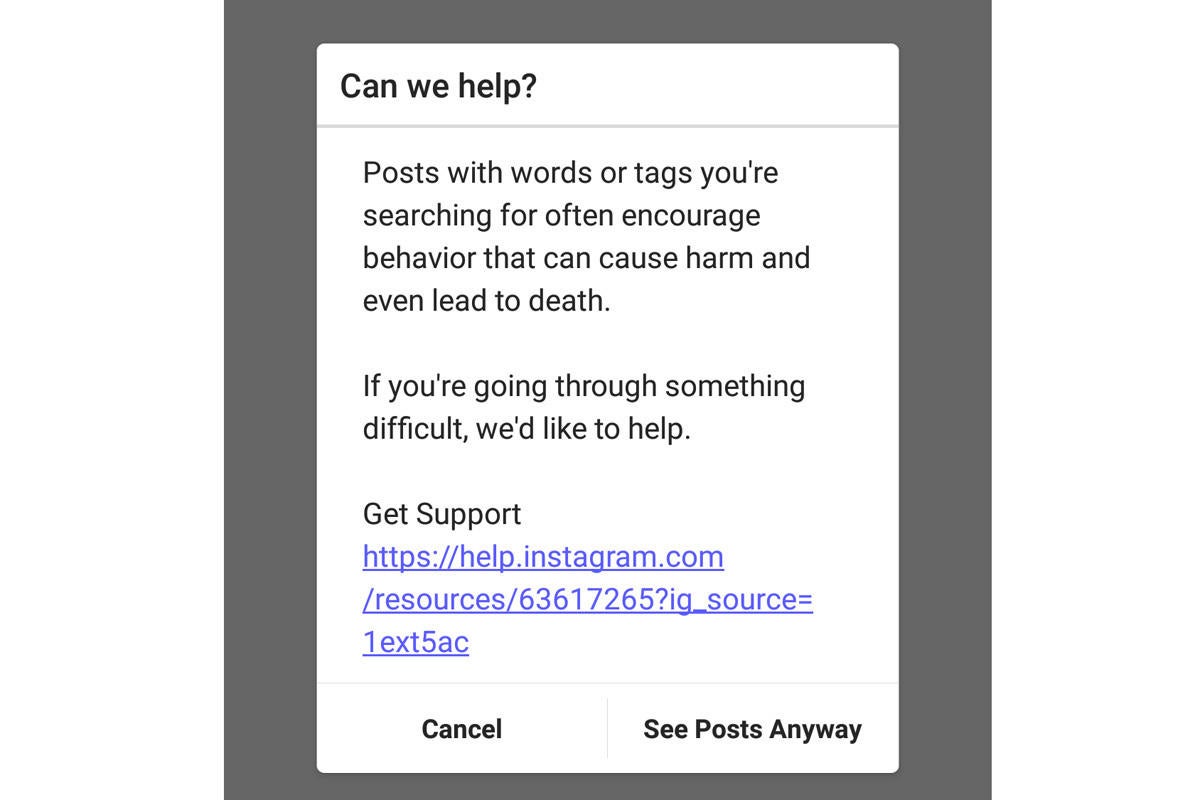
blue whale challenge instagram message IDG

Vulnerable young people are the targets for Blue Whale. Once the app is downloaded onto a phone, it reportedly hacks the phone and harvests the user’s information. In the Blue Whale Challenge, a group administrator – also referenced as a mentor or master – gives a young person a task to complete each day for 50 days. If a person balks at the daily task, then the personal information which was stolen is used as a form of blackmail as in do this or else your private information will be released or your family threatened. The task on the last day is to commit suicide. This is supposedly winning the game.

To read this article in full or to leave a comment, please click here

Read More
FortinetSecurity

Security Research News in Brief – April 2017 Edition

Credit to Author: Axelle Apvrille| Date: Wed, 10 May 2017 09:08:47 -0700

Welcome back to our monthly review of some of the most interesting security research publications. Previous edition: March 2017   What happened to your home? IoT Hacking and Forensic with 0-day from TROOPERS 17, by Park and Jin Figure 1: Hacking a vacuum cleaner The authors hacked a vacuum cleaner, which, besides cleaning, also includes an embedded camera and microphone. The hack wasn’t easy because the vacuum wasn’t too badly secured. The authors however found 2 vectors: 1. They connected on the…

Read More
ComputerWorldIndependent

Microsoft finally bans SHA-1 certs in IE and Edge

Credit to Author: Lucian Constantin| Date: Wed, 10 May 2017 09:08:00 -0700

The Tuesday updates for Internet Explorer and Microsoft Edge force those browsers to flag SSL/TLS certificates signed with the aging SHA-1 hashing function as insecure. The move follows similar actions by Google Chrome and Mozilla Firefox earlier this year.

Browser vendors and certificate authorities have been engaged in a coordinated effort to phase out the use of SHA-1 certificates on the web for the past few years, because the hashing function no longer provides sufficient security against spoofing.

SHA-1 (Secure Hash Algorithm 1) dates back to 1995 and has been known to be vulnerable to theoretical attacks since 2005. The U.S. National Institute of Standards and Technology has banned the use of SHA-1 by U.S. federal agencies since 2010, and digital certificate authorities have not been allowed to issue SHA-1-signed certificates since Jan. 1, 2016, although some exemptions have been made — for example, for outdated payment terminals.

To read this article in full or to leave a comment, please click here

Read More
IndependentKrebs

SSA.GOV To Require Stronger Authentication

Credit to Author: BrianKrebs| Date: Wed, 10 May 2017 13:01:13 +0000

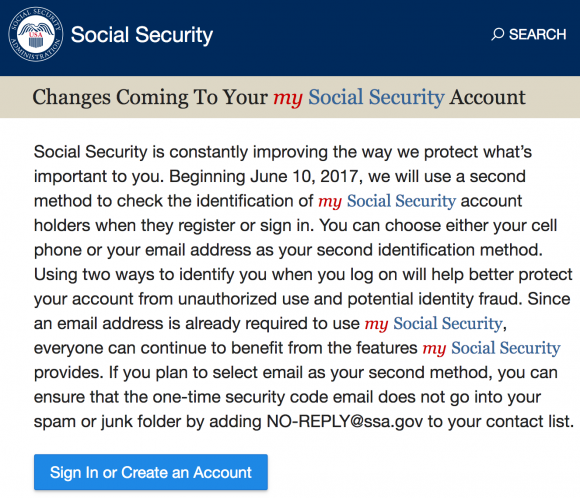
The U.S. Social Security Administration will soon require Americans to use stronger authentication when accessing their accounts at ssa.gov. As part of the change, SSA will require all users to enter a username and password in addition to a one-time security code sent their email or phone. In this post, we’ll parse this a bit more and look at some additional security options for SSA users.

Read More
SecurityTrendMicro

Transforming the Cyber Health of Small HCOs Across the US

Credit to Author: Blake Sutherland| Date: Wed, 10 May 2017 13:59:55 +0000

When we talk about healthcare breaches, people usually remember the big-name incidents: Anthem, Premera, Banner Health, and so on. Yet in reality there’s a huge number of smaller providers who are in the hackers’ sights and maybe don’t have the resources or expertise to adequately defend themselves. With ransomware threatening to shut down systems and…

Read More
ComputerWorldIndependent

With security awareness, money talks

Credit to Author: Evan Schuman| Date: Wed, 10 May 2017 04:00:00 -0700

According to a recent report, academics have been analyzing brainwaves of computer users to improve how they are alerted to cybersecurity dangers. I’m sorry, but getting users to pay stricter attention to security isn’t brain surgery: It’s all about money and job security. Come to think of it, job security itself is all about money, which makes money the only carrot and the only stick that IT needs.

That report, courtesy of Bloomberg BNA, said, “Many computer users automatically swat away repetitive dialogue box warnings of impending doom, especially when they are engaged in another activity. Now, engineers are using data analytics based on user tracking to discover what might help users pay attention to warnings. Software engineers are exploring promising techniques, such as changing background colors in warning notifications and switching formats to distinguish substantial security warnings from mundane messages. Tapping people’s brains helps the engineers design more effective user interfaces.”

To read this article in full or to leave a comment, please click here

Read More
SecurityTrendMicro

Randstad Group Selects Trend Micro to Protect its Public Cloud Infrastructure

Credit to Author: Trend Micro| Date: Wed, 10 May 2017 12:00:48 +0000

The Randstad Group is currently in the process of consolidating and centralizing its IT infrastructure across 30 IT departments, and will be providing service to more than 40 operating countries across four continents. To ensure the new infrastructure will have optimal security the company selected Trend Micro as its cloud security solution partner for the…

Read More