Credit to Author: Wendy Torell| Date: Mon, 24 Feb 2020 16:40:00 +0000
Liquid cooling has been around for some time now, but has tended to be very niche… until now. There’s a lot of buzz about liquid cooling as a necessary technology… Read more »
Credit to Author: Benjamin Wilson| Date: Mon, 24 Feb 2020 12:15:51 +0000
When you look at the equipment on your site, do you ever consider these questions: When was it installed? How long is its operating life? When will it require servicing?… Read more »
Credit to Author: BrianKrebs| Date: Mon, 24 Feb 2020 17:13:11 +0000
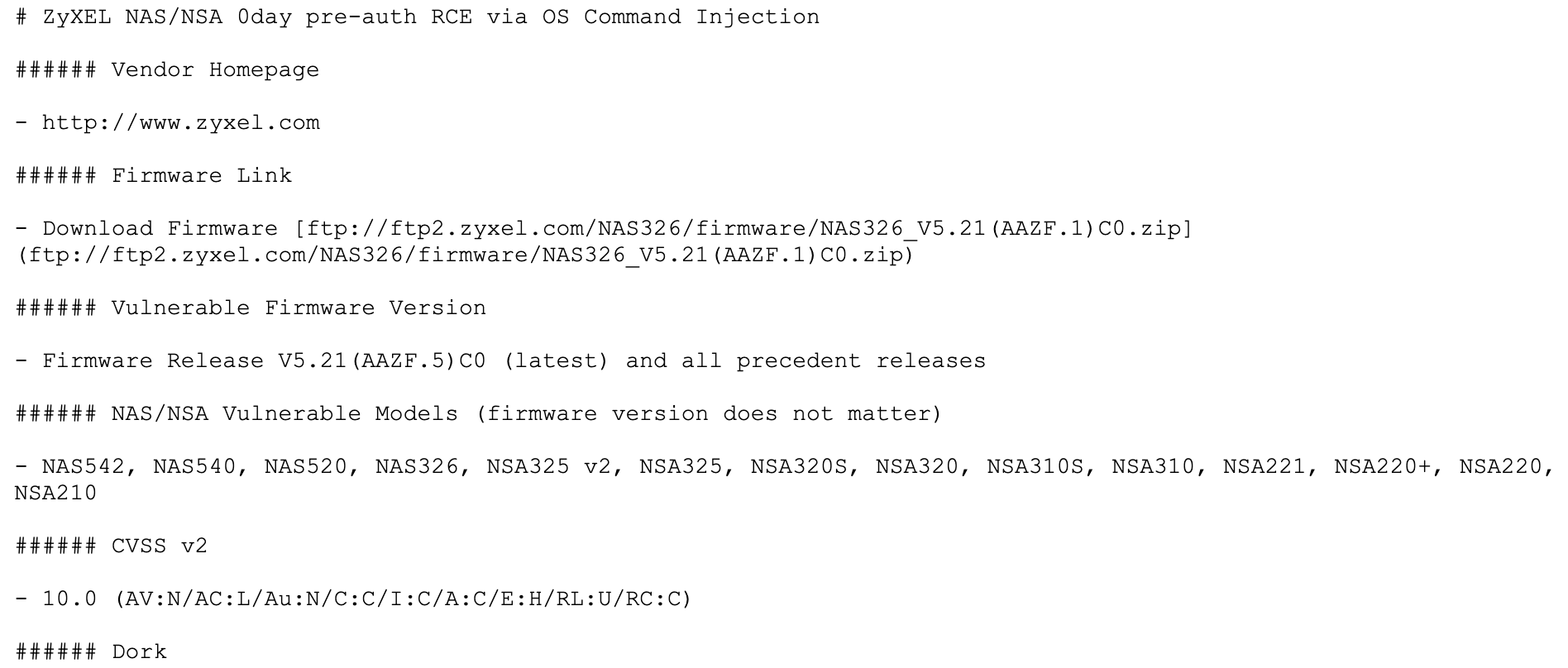
Networking hardware vendor Zyxel today released an update to fix a critical flaw in many of its network attached storage (NAS) devices that can be used to remotely commandeer them. The patch comes 12 days after KrebsOnSecurity alerted the company that precise instructions for exploiting the vulnerability were being sold for $20,000 in the cybercrime underground. Based in Taiwan, Zyxel Communications Corp. (a.k.a “ZyXEL”) is a maker of networking devices, including Wi-Fi routers, NAS products and hardware firewalls. The company has roughly 1,500 employees and boasts some 100 million devices deployed worldwide. While in many respects the class of vulnerability addressed in this story is depressingly common among Internet of Things (IoT) devices, the flaw is notable because it has attracted the interest of groups specializing in deploying ransomware at scale.
Credit to Author: Malwarebytes Labs| Date: Mon, 24 Feb 2020 16:32:34 +0000
A roundup of the previous week’s most notable security stories and events, including cloud identity management, a noteworthy Twitter scam-tastrophy, RobbinHood ransomware, and more.
Credit to Author: Jovi Umawing| Date: Mon, 24 Feb 2020 16:00:00 +0000
What many don’t realize is that SMBs need the same level of protection from threats that are usually only afforded to enterprises. Managed service providers (MSPs) are the key to getting the protection and service they need while staying on budget.
Credit to Author: Jonny Evans| Date: Mon, 24 Feb 2020 06:06:00 -0800
Does your voice assistant wake up randomly when you are engaged in normal conversation, listening to radio, or watching TV? You’re not alone, and this may have serious implications in enterprise security policy.
All things being equal (they’re not)
“Anyone who has used voice assistants knows that they accidentally wake up and record when the ‘wake word’ isn’t spoken – for example, ‘seriously’ sounds like the wake word ‘Siri’ and often causes Apple’s Siri-enabled devices to start listening,” the Smart Speakers research study says.
Credit to Author: Swapnil Nigade| Date: Mon, 24 Feb 2020 09:59:32 +0000
Today, almost every computer user leverages a variety of web browsers to surf the internet — Microsoft Internet Explorer, Mozilla Firefox, and Apple Safari are some of the popular browsers in use in recent times. It is very important to configure internet browser(s) in a secure way because vulnerable web…