Security News This Week: Julian Assange Has Lost His Internet Privileges

Credit to Author: Wired Staff| Date: Sat, 31 Mar 2018 13:00:00 +0000
As always, we’ve rounded up all the news we didn’t break or cover in depth this week.
Read MoreRSS Reader for Computer Security Articles
Credit to Author: Wired Staff| Date: Sat, 31 Mar 2018 13:00:00 +0000
As always, we’ve rounded up all the news we didn’t break or cover in depth this week.
Read More
Credit to Author: Klint Finley| Date: Fri, 30 Mar 2018 22:11:39 +0000
Internet infrastructure company Cloudflare appears to be preparing to launch a service to encrypt traffic to the computers that look up web addresses.
Read More
Credit to Author: Lily Hay Newman| Date: Fri, 30 Mar 2018 22:10:57 +0000
If Under Armour had protected all passwords equally, its 150-million-user MyFitnessPal breach wouldn’t have been nearly as bad.
Read More
Credit to Author: Lily Hay Newman| Date: Fri, 30 Mar 2018 13:18:51 +0000
Atlanta isn’t the SamSam ransomware strain’s first victim—and it won’t be the last.
Read More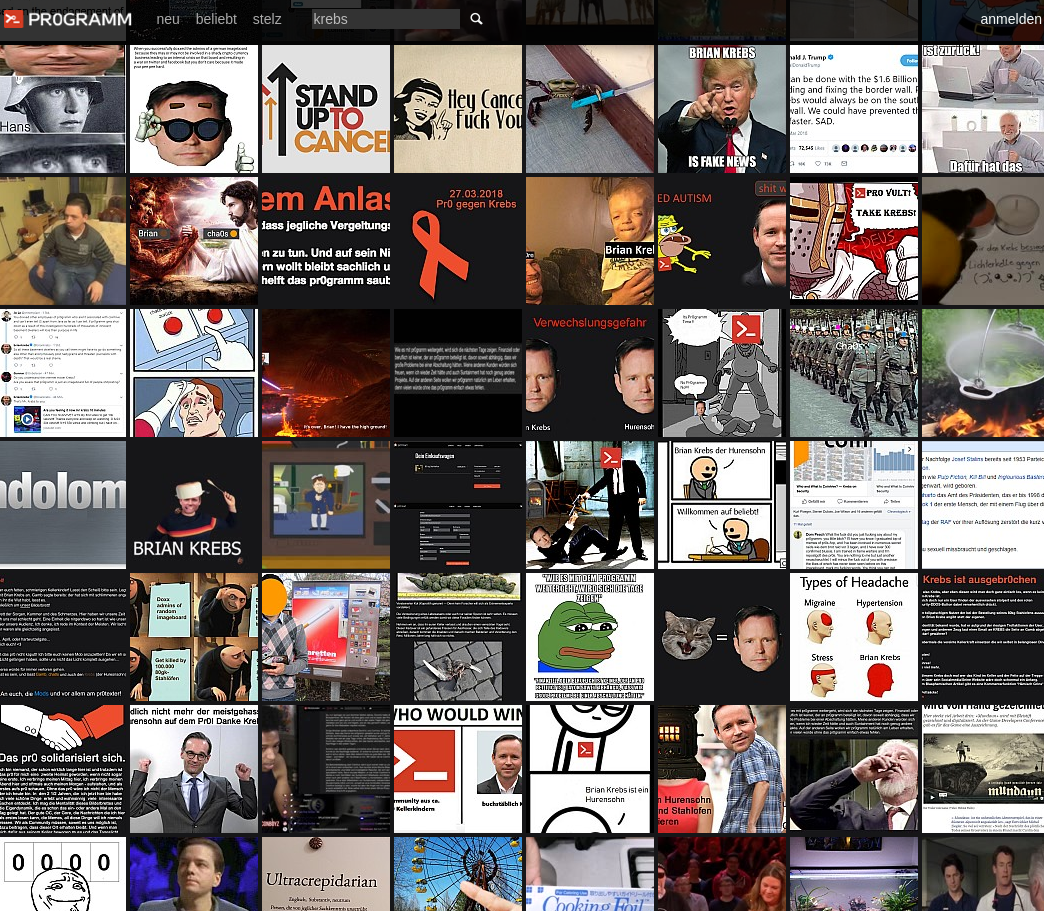
Credit to Author: BrianKrebs| Date: Fri, 30 Mar 2018 17:55:56 +0000
A story published here this week revealed the real-life identity behind the original creator of Coinhive — a controversial cryptocurrency mining service that several security firms have recently labeled the most ubiquitous malware threat on the Internet today. In an unusual form of protest against that story, members of a popular German language image-posting board founded by the Coinhive creator have vented their dismay by donating tens of thousands of euros to local charities that support cancer research. On Monday KrebsOnSecurity published Who and What is Coinhive, an in-depth story which proved that the founder of Coinhive was indeed the founder of the German image hosting and discussion forum pr0gramm[dot]com (not safe for work). I undertook the research because Coinhive’s code primarily is found on tens of thousands of hacked Web sites, and because the until-recently anonymous Coinhive operator(s) have been reluctant to take steps that might curb the widespread abuse of their platform.
Read MoreCredit to Author: Jovi Umawing| Date: Fri, 30 Mar 2018 16:00:00 +0000
 | |
| Peer-to-peer (P2P) mobile transactions are on the rise, thanks to a number of mobile payment apps available on the market. In this post, we’ll look at the security risks of using P2P payment apps and what users can do to protect themselves. Categories: Tags: mobile paymentp2p paymentp2p transactionpeer-to-peerprivacysocial paymenttransaction reversal scam |
The post You down with P2P? 10 tips to secure your mobile payment app appeared first on Malwarebytes Labs.
Read MoreCredit to Author: Christopher Boyd| Date: Fri, 30 Mar 2018 15:00:00 +0000
 | |
| TLS 1.3 is nearly upon us, and with it comes a more secure way to do business online. We look at some of the changes coming into force soon. Categories: Tags: internetonlineTLSTLS 1.3transport layer security |
The post TLS 1.3 is nearly here appeared first on Malwarebytes Labs.
Read More
Credit to Author: Lucas Mearian| Date: Fri, 30 Mar 2018 03:03:00 -0700
Facial recognition technology, which has begun to gain traction on mobile devices like the iPhone X and various Android smartphones, could soon show up at work – and at the airport.
The technology uses a person’s face to authenticate their identity, making it a potentially important security tool.
In 2015, Google launched its “Trusted Face” feature as part of its Android 5.0 Lollipop update. Trusted Face, part of Android’s Smart Lock technology, works in the same way as Apple’s Face ID, which replaced the Touch ID fingerprint reader on the iPhone X.