Credit to Author: Michael Kan| Date: Tue, 14 Mar 2017 04:05:00 -0700
Efforts to stop Mirai, a malware found infecting thousands of IoT devices, have become a game of whack-a-mole, with differing opinions over whether hackers or the security community are making any headway.
The malicious code became publicly available in late September. Since then, it’s been blamed for enslaving IoT devices such as DVRs and internet cameras to launch massive distributed denial-of-service attacks, one of which disrupted internet access across the U.S. in October.
The good news: Last month, police arrested one suspected hacker who may have been behind several Mirai-related DDoS attacks.
Credit to Author: BrianKrebs| Date: Tue, 14 Mar 2017 05:17:33 +0000
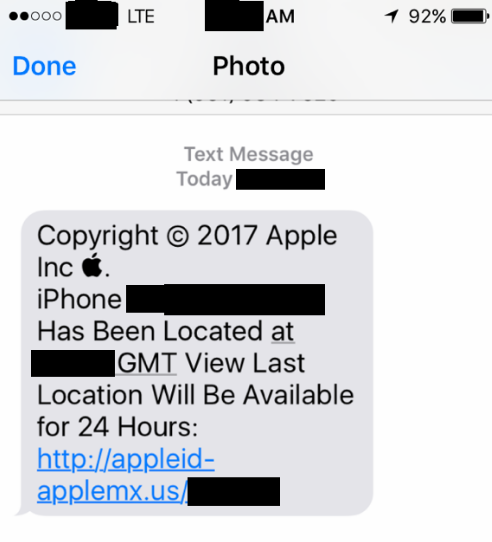
KrebsOnSecurity recently featured the story of a Brazilian man who was peppered with phishing attacks trying to steal his Apple iCloud username and password after his wife’s phone was stolen in a brazen daylight mugging. Today, we’ll take an insider’s look at an Apple iCloud phishing gang that appears to work quite closely with organized crime rings — within the United States and beyond — to remotely unlock and erase stolen Apple devices. Victims of iPhone theft can use the Find My iPhone feature to remotely locate, lock or erase their iPhone — just by visiting Apple’s site and entering their iCloud username and password. Likewise, an iPhone thief can use those iCloud credentials to remotely unlock the victim’s stolen iPhone, wipe the device, and resell it. As a result, iPhone thieves often subcontract the theft of those credentials to third-party iCloud phishing services. This story is about one of those services.
Credit to Author: Pieter Arntz| Date: Mon, 13 Mar 2017 18:18:36 +0000
We explain what adware and ad fraud are and point out the differences by discussing the methods and the classification of the malware that is involved.
Credit to Author: Michael Kan| Date: Mon, 13 Mar 2017 10:51:00 -0700
Has the CIA ever spied on you? That’s a key question swirling around the WikiLeaks document dump that allegedly details the U.S. agency’s secret hacking tools.
The documents themselves don’t reveal much about who the CIA might have snooped on. But the agency certainly has the power to spy on foreigners outside the U.S., said Paul Pillar, a former deputy counterterrorism chief with the CIA.
That’s its job after all: To collect foreign intelligence. But even so, the CIA is pretty selective with its targets.