ComputerWorld

ComputerWorldIndependent

5 ways to stop future global malware attacks

Credit to Author: Preston Gralla| Date: Mon, 22 May 2017 14:06:00 -0700

The global WannaCry ransomware attack, which crippled hospitals, government organizations, companies and individuals around the world, didn’t have to happen. It was no grand technological feat perpetrated by genius hacker masterminds. Instead, it took advantage of the lazy, patchwork way organizations handle security and the seamy roles that the National Security Agency (NSA) and big tech companies play in undermining security in the internet age.

And that, in fact, is a piece of good news. Because it means that stopping the next global malware attack needn’t be impossible. Here are five steps that can do it.

To read this article in full or to leave a comment, please click here

Read More
ComputerWorldIndependent

No, Windows XP didn't fuel WannaCry

Credit to Author: Gregg Keizer| Date: Mon, 22 May 2017 12:57:00 -0700

The global WannaCry attack that started 10 days ago touched just a handful of Windows XP PCs, a security expert said Monday, contradicting the narrative that the aged OS was largely responsible for the ransomware’s crippling impact.

“There were no real WannaCry infections of Windows XP,” said Costin Raiu, director of Kaspersky Lab’s global research and analysis team, in an interview Monday. “We’ve seen only a handful of cases, less than a dozen, and it looks like most of them were testers [self-infecting systems].”

Raiu’s claim countered an assertion made by virtually every media report and blog post published after “WannaCry” emerged June 12. Countless news stories blamed Windows XP, which Microsoft retired three years ago, for falling victim to the attack because the vulnerability that WannaCry exploited had not been patched in the obsolete OS.

To read this article in full or to leave a comment, please click here

Read More
ComputerWorldIndependent

IDG Contributor Network: Winning the war on ransomware

Credit to Author: Rob Cheng| Date: Mon, 22 May 2017 11:00:00 -0700

Back in the ‘70s, the United States suffered a severe oil shortage.

Lines at the gas station filled city blocks. Thieves siphoned gasoline not to save money but time. In response, the federal government created a measurement, miles per gallon. Since then, MPG has become a factor in many car purchase decisions. Today, fuel efficiency has improved threefold, and we have hybrid and electric cars.

We are facing another crisis that threatens our way of life — ransomware. Cybercriminals hold hostage individual, public sector and enterprise data with remarkable ease and frequency. Although paying ransoms may solve a short-term problem, it almost guarantees that attacks will continue creating a larger threat to our digital society.

To read this article in full or to leave a comment, please click here

Read More
ComputerWorldIndependent

Leak: Secret Facebook rules on what violence, self-harm and child abuse can be posted

Credit to Author: Darlene Storm| Date: Mon, 22 May 2017 06:18:00 -0700

Facebook allows users to livestream self-harm, post videos of violent deaths and photos of non-sexual child abuse, but comments which threaten to harm President Donald Trump are to be deleted, according to Facebook’s secret rule books for monitoring what its 2 billion users can post.

The Guardian got hold of leaked copies of over 100 internal Facebook manuals and documents that tell moderators how to handle content which includes violence, sex, hate speech, terrorism, nudity, self-harm, revenge porn and more controversial content – even cannibalism.

To read this article in full or to leave a comment, please click here

Read More

(Insider Story)

Read More
ComputerWorldIndependent

Windows Defender does not defend Windows 7 against WannaCry

Credit to Author: Michael Horowitz| Date: Sun, 21 May 2017 17:37:00 -0700

Thanks to Kaspersky, we now know that 98% of the Windows machines infected by WannaCry/WannaCrypt were running Windows 7. Since, once it gets a foothold, the malware can infect an entire network, most of the attention was focused on LAN based attacks. My previous blog was about using the Windows firewall as a defensive measure.

But any malware can spread in multiple ways so there is always a need for anti-malware software on Windows PCs. The May 12th blog post, Customer Guidance for WannaCrypt attacks, in which Microsoft announced the release of a bug fix for Windows XP, mentioned that 

To read this article in full or to leave a comment, please click here
Read More
ComputerWorldIndependent

The ransomware epidemic: How to prep for a shakedown

Credit to Author: Ryan Francis| Date: Fri, 19 May 2017 13:37:00 -0700

‘Know your enemy’ – understanding what to prepare for
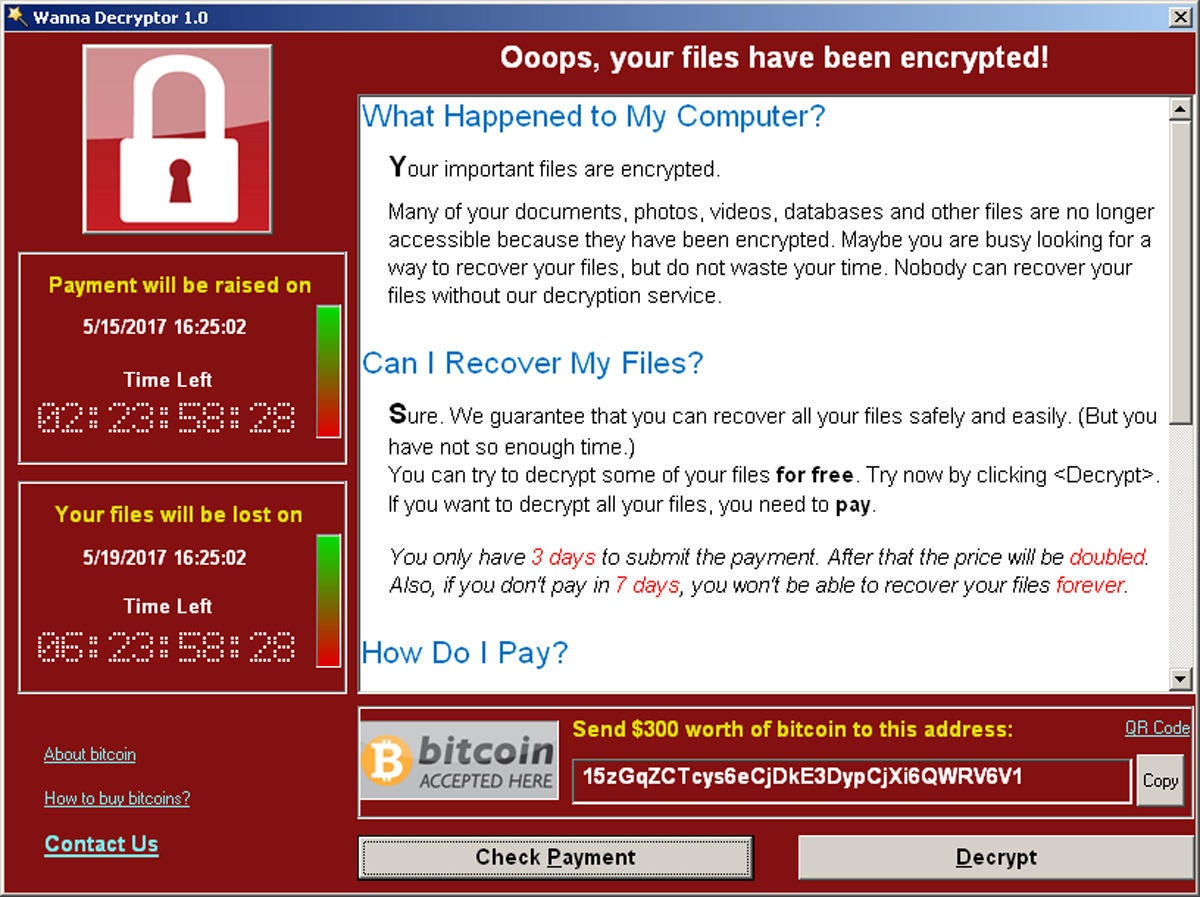
wannacry ransom screenshot

Image by Reuters

While ransomware isn’t new, this once-simple criminal hacker tactic has morphed into a devastatingly effective weapon wielded by more advanced cyber-criminals — as seen with the recent Wannacry outbreack. These sophisticated attackers are highly motivated by the profitable nature of their efforts. Dan Larson, technical director at CrowdStrike, looks at the current state of ransomware, why organizations should take  threats seriously and how to build a strong defense.

To read this article in full or to leave a comment, please click here

Read More
ComputerWorldIndependent

The Windows firewall is the overlooked defense against WannaCry and Adylkuzz

Credit to Author: Michael Horowitz| Date: Fri, 19 May 2017 09:25:00 -0700

Despite all the attention currently focused on Windows computers being infected with WannaCry ransomware, a defensive strategy has been overlooked. This being a Defensive Computing blog, I feel the need to point it out.

The story being told everywhere else is simplistic and incomplete. Basically, the story is that Windows computers without the appropriate bug fix are getting infected over the network by WannaCry ransomware and the Adylkuzz cryptocurrency miner. 

We are accustomed to this story. Bugs in software need patches. WannaCry exploits a bug in Windows, so we need to install the patch. For a couple days, I too, ascribed to this knee-jerk theme. But there is a gap in this simplistic take on the issue. Let me explain. 

To read this article in full or to leave a comment, please click here

Read More