ComputerWorld

ComputerWorldIndependent

Six in 10 people believe their lives will improve with autonomous vehicles

Credit to Author: Lucas Mearian| Date: Thu, 06 Apr 2017 03:00:00 -0700

Six in 10 people believe connected and autonomous vehicles (CAVs) will improve their quality of life, according to a new study by Strategy Consulting and PricewaterhouseCoopers (PwC).

The study, commissioned by the U.K.-based trade association Society of Motor Manufacturers and Traders, also found half of drivers age 17 to 24 would use a connected, autonomous vehicle (CAV) today.

Among all those surveyed, the biggest benefit from CAVs would be stress-free driving, with cars that brake and park themselves as top attributes.

To read this article in full or to leave a comment, please click here

Read More
ComputerWorldIndependent

U.S. may expand laptop ban to more airports

Credit to Author: Michael Kan| Date: Wed, 05 Apr 2017 18:09:00 -0700

The U.S. might add other airports to its ban restricting passengers from bringing laptops and other electronics into the cabin for certain flights from the Middle East.

“We may take measures in the not too distant future to expand the number of airports,” said Homeland Security secretary John Kelly on Wednesday during a congressional hearing.

Last month, the U.S. announced the ban, which affects ten airports, all of which are in Muslim-majority countries. Passengers flying to the U.S. are barred from bringing any electronic devices larger than a smartphone into a plane’s cabin, and must instead check them in as baggage.    

To read this article in full or to leave a comment, please click here

Read More
ComputerWorldIndependent

Critical Xen hypervisor flaw endangers virtualized environments

Credit to Author: Lucian Constantin| Date: Wed, 05 Apr 2017 10:59:00 -0700

A critical vulnerability in the widely used Xen hypervisor allows attackers to break out of a guest operating system running inside a virtual machine and access the host system’s entire memory.

This is a serious violation of the security barrier enforced by the hypervisor and poses a particular threat to multi-tenant data centers where the customers’ virtualized servers share the same underlying hardware.

The open-source Xen hypervisor is used by cloud computing providers and virtual private server hosting companies, as well as by security-oriented operating systems like Qubes OS.

The new vulnerability affects Xen 4.8.x, 4.7.x, 4.6.x, 4.5.x, and 4.4.x and has existed in the Xen code base for over four years. It was unintentionally introduced in December 2012 as part of a fix for a different issue.

To read this article in full or to leave a comment, please click here

Read More
ComputerWorldIndependent

Microsoft reveals what data Windows 10 collects from you

Credit to Author: Darlene Storm| Date: Wed, 05 Apr 2017 09:22:00 -0700

Microsoft has been under fire for its privacy practices since Windows 10 launched in July 2015, so the company finally caved to the pressure to be more transparent and revealed the type of diagnostic data it collects.

According to Microsoft, “One of our most important improvements in the Creators Update is a set of privacy enhancements that will be mostly behind the scenes.” Today Microsoft listed three new things about your privacy with Windows 10 after upgrading to the Creators Update. It clarified descriptions about privacy settings, updated its privacy statement and, best of all, it coughed up more information about the data Windows 10 collects from you.

To read this article in full or to leave a comment, please click here
Read More
ComputerWorldIndependent

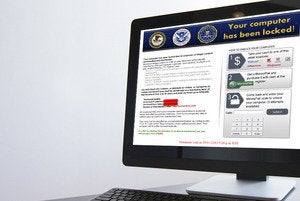
How to rescue your PC from ransomware

Credit to Author: Eric Geier| Date: Mon, 03 Apr 2017 17:51:00 -0700

With  nasty malware like Locky making the rounds—encrypting its victims’ files, and then refusing to unlock them unless you pay up—ransomware is a serious headache. But not all ransomware is so difficult.

You can remove many ransomware viruses without losing your files, but with some variants that isn’t the case. In the past I’ve discussed general steps for removing malware and viruses, but you need to apply some specific tips and tricks for ransomware. The process varies and depends on the type of invader. Some procedures involve a simple virus scan, while others require offline scans and advanced recovery of your files. I categorize ransomware into three varieties: scareware, lock-screen viruses, and the really nasty stuff.

To read this article in full or to leave a comment, please click here

Read More
ComputerWorldIndependent

Facebook loses appeal over New York search warrants

Credit to Author: John Ribeiro| Date: Wed, 05 Apr 2017 04:12:00 -0700

Facebook’s appeal against 381 warrants for information from the accounts of its users was rejected by a  court in New York  on the grounds that earlier orders refusing to quash the warrants issued in a criminal proceeding could not be appealed.

The decision by the New York State Court of Appeals did not address key issues of whether the broad searches were unconstitutional, and whether internet service providers like Facebook have standing to challenge such warrants on behalf of their users, particularly when they are served with gag orders that prevent providers from informing subscribers about the warrants.

“This case undoubtedly implicates novel and important substantive issues regarding the constitutional rights of privacy and freedom from unreasonable search and seizure, and the parameters of a federal statute establishing methods by which the government may obtain certain types of information,” wrote Judge Leslie E. Stein, writing for the majority.

To read this article in full or to leave a comment, please click here

Read More
ComputerWorldIndependent

Chinese hackers go after third-party IT suppliers to steal data

Credit to Author: Michael Kan| Date: Tue, 04 Apr 2017 14:52:00 -0700

Companies that choose to outsource their IT operations should be careful. Suspected Chinese hackers have been hitting businesses by breaching their third-party IT service providers. 

Major IT suppliers that specialize in cloud storage, help desk, and application management have become a top target for the hacking group known as APT10, security providers BAE Systems and PwC said in a joint report.

That’s because these suppliers often have direct access to their client’s networks. APT10 has been found stealing intellectual property as part of a global cyberespionage campaign that ramped up last year, PwC said on Monday.

To read this article in full or to leave a comment, please click here

Read More