Independent

ComputerWorldIndependent

Now’s the time to install the April Windows and Office patches

Credit to Author: Woody Leonhard| Date: Fri, 03 May 2019 07:04:00 -0700

April was a tough month for Win 7, 8.1, Server 2008 R2, 2012 and 2012 R2 customers who ran specific antivirus products. Blue screens, freezes, slow-as-sludge drippings all bedeviled a large number of Sophos, Avira, Avast, AVG and even McAfee users.

Looks like we’re over that hump, with the AV manufacturers scurrying to fix their wares.
To read this article in full, please click here

Read More
ComputerWorldIndependent

Wayback Wednesday: At least he asked

Credit to Author: Sharky| Date: Wed, 01 May 2019 03:00:00 -0700

Malware from the web is slowly becoming a problem where this support pilot fish works.

“We have about two tickets a week with users saying they have thousands of viruses and they need to download software,” says fish.

“Now, every machine has virus protection, and everyone runs locked-down in user-only mode to prevent the rogue installation of software. But we have decided we need to increase our user awareness after the following ticket was received at the help desk:

“‘I just received an ominous warning that my computer was infected with several viruses. I tried running the program to remove these viruses (as it indicated for me to do), but I’m not sure it worked.

To read this article in full, please click here

Read More
IndependentKrebs

Data: E-Retail Hacks More Lucrative Than Ever

Credit to Author: BrianKrebs| Date: Tue, 30 Apr 2019 20:13:03 +0000

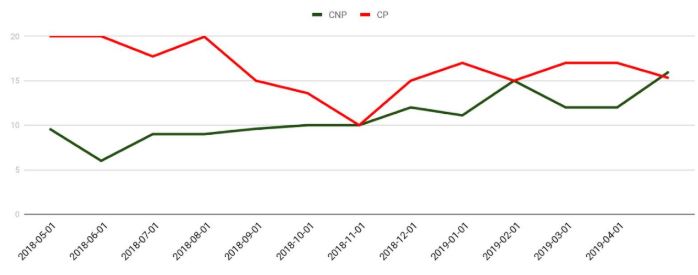
For many years and until quite recently, credit card data stolen from online merchants has been worth far less in the cybercrime underground than cards pilfered from hacked brick-and-mortar stores. But new data suggests that over the past year, the economics of supply-and-demand have helped to double the average price fetched by card-not-present data, meaning cybercrooks now have far more incentive than ever to target e-commerce stores.

Read More
ComputerWorldIndependent

Microsoft tells IT admins to nix 'obsolete' password reset practice

Credit to Author: Gregg Keizer| Date: Tue, 30 Apr 2019 03:00:00 -0700

Microsoft last week recommended that organizations no longer force employees to come up with new passwords every 60 days.

The company called the practice – once a cornerstone of enterprise identity management – “ancient and obsolete” as it told IT administrators that other approaches are much more effective in keeping users safe.

“Periodic password expiration is an ancient and obsolete mitigation of very low value, and we don’t believe it’s worthwhile for our baseline to enforce any specific value,” Aaron Margosis, a principal consultant for Microsoft, wrote in a post to a company blog.

To read this article in full, please click here

Read More
ComputerWorldIndependent

Microsoft Patch Alert: April patches have sharp edges, with several missing, others reappearing

Credit to Author: Woody Leonhard| Date: Mon, 29 Apr 2019 09:32:00 -0700

You have to wonder who’s testing this stuff.

Admins, in particular, have had a tough month. April brought widespread breakdowns – bluescreens, hangs, very sluggish behavior – to hundreds of thousands of Win7 and 8.1 machines. This wasn’t a “small percentage” kind of event. For some companies, rebooting overnight on Tuesday brought seas of blue screens on Wednesday morning.

The first round of cumulative updates and Monthly Rollups arrived on Patch Tuesday, but the now-ubiquitous second round didn’t show up until late Thursday afternoon, two and a half weeks later. Talk about admins taking a beating.

We still have one Tuesday left this month – the mythical “E week” that Microsoft never talks about – so the month may yet end with both a bang and whimper.

To read this article in full, please click here

Read More
ComputerWorldIndependent

Why wearables, health records and clinical trials need a blockchain injection

Credit to Author: Lucas Mearian| Date: Mon, 29 Apr 2019 03:00:00 -0700

TORONTO – The opportunity exists in healthcare to hand over control of medical records to patients who can choose not only what info providers can see but what personal data gets added to records via wearables, genomics and even lifestyle choices.

And once patients begin accumulating more data about themselves in personal health records (PHRs), they can opt to anonymize that information and sell it to researchers, vastly expanding the pool of information available for clinical studies.

Because no data is as sensitive as a medical record, being able to assure its security and immutability through blockchain encryption represents a unique opportunity to “repatriate” and “monetize” that record for the patient, according to Dr. Eric Hoskins, chair of Canada’s Federal Advisory Council on the Implementation of National Pharmacare.

To read this article in full, please click here

Read More
ComputerWorldIndependent

FedEx CIO: It’s time to mandate blockchain for international shipping

Credit to Author: Lucas Mearian| Date: Thu, 25 Apr 2019 10:26:00 -0700

TORONTO — When railroad tracks were first laid across the western U.S., there were eight different gauges all competing to dominate the industry – making a nationwide, unified rail system impossible; it took an act of Congress in 1863 to force the adoption of an industry standard gauge of 4-ft., 8-1⁄2 inches.

FedEx CIO Rob Carter believes the same kind of thing needs to happen for blockchain to achieve widespread enterprise adoption.

While the promise of blockchain to create a more efficient, secure and open platform for ecommerce can be realized using a proprietary platform, it won’t be a global solution for whole industries now hampered by a myriad of technical and regulatory hurdles. Instead, a platform based on open-source software and industry standards will be needed to ensure process transparency and no one entity profits from the technology over others.

To read this article in full, please click here

Read More