Independent

ComputerWorldIndependent

Microsoft Patch Alert: Still reeling from one of the worst patching months ever

Credit to Author: Woody Leonhard| Date: Thu, 26 Jul 2018 14:31:00 -0700

If you ever wondered why people — and organizations — are taking longer and longer to willfully install patches, take a look at what happened this month. After a disastrous start, Windows 10 patches seem to be OK, but .NET and Server patches still stink.

For most of the year, we’ve seen two big cumulative updates every month for each of the supported Win10 versions. This month, so far, we’ve had three. Microsoft’s claim that it will install the Win7 and Win8.1 Monthly Rollups defies logic. The .NET patches are in such bad shape that the .NET devs have thrown in the towel. And here we sit not knowing exactly which way is up.

Three Win10 cumulative updates for each version in July

On Patch Tuesday, July 10, as usual, Microsoft rolled out cumulative updates for all of the supported versions of Windows 10. Almost immediately we heard screams of pain as four big bugs, later officially acknowledged, hit the fan. Six days later, Microsoft released a second set of cumulative updates, again for all versions of Win10. Those updates were specifically designed to fix the bugs introduced by the original updates. The build numbers in the Knowledge Base articles didn’t match the build numbers that people actually installed but, well, that’s Microsoft.

To read this article in full, please click here

Read More
ComputerWorldIndependent

Android security: Analysis, advice, and next-level knowledge

Credit to Author: JR Raphael| Date: Thu, 26 Jul 2018 03:00:00 -0700

It’s tough to talk about Android security without venturing into sensational terrain.

A large part of that is due to the simple fact that the forces driving most Android security coverage are companies that make their money by selling Android security software — and thus companies with strong interests in pushing the narrative that every Android phone is on the perpetual brink of grave, unfathomable danger. Plus, let’s face it: A headline about 70 gazillion Android phones being vulnerable to the MegaMonsterSkullCrusher Virus is far more enticing than one explaining the nuanced realities of Android security.

In actuality, though, Android security is a complex beast — one with multiple layers in place to protect you and one that almost never warrants an alarmist attitude. I’ve been covering Android security closely since the platform’s earliest days, and I’ve busted more myths and called out more shameless publicity stunts than I can even count at this point.

To read this article in full, please click here

Read More
IndependentKrebs

LifeLock Bug Exposed Millions of Customer Email Addresses

Credit to Author: BrianKrebs| Date: Wed, 25 Jul 2018 22:20:46 +0000

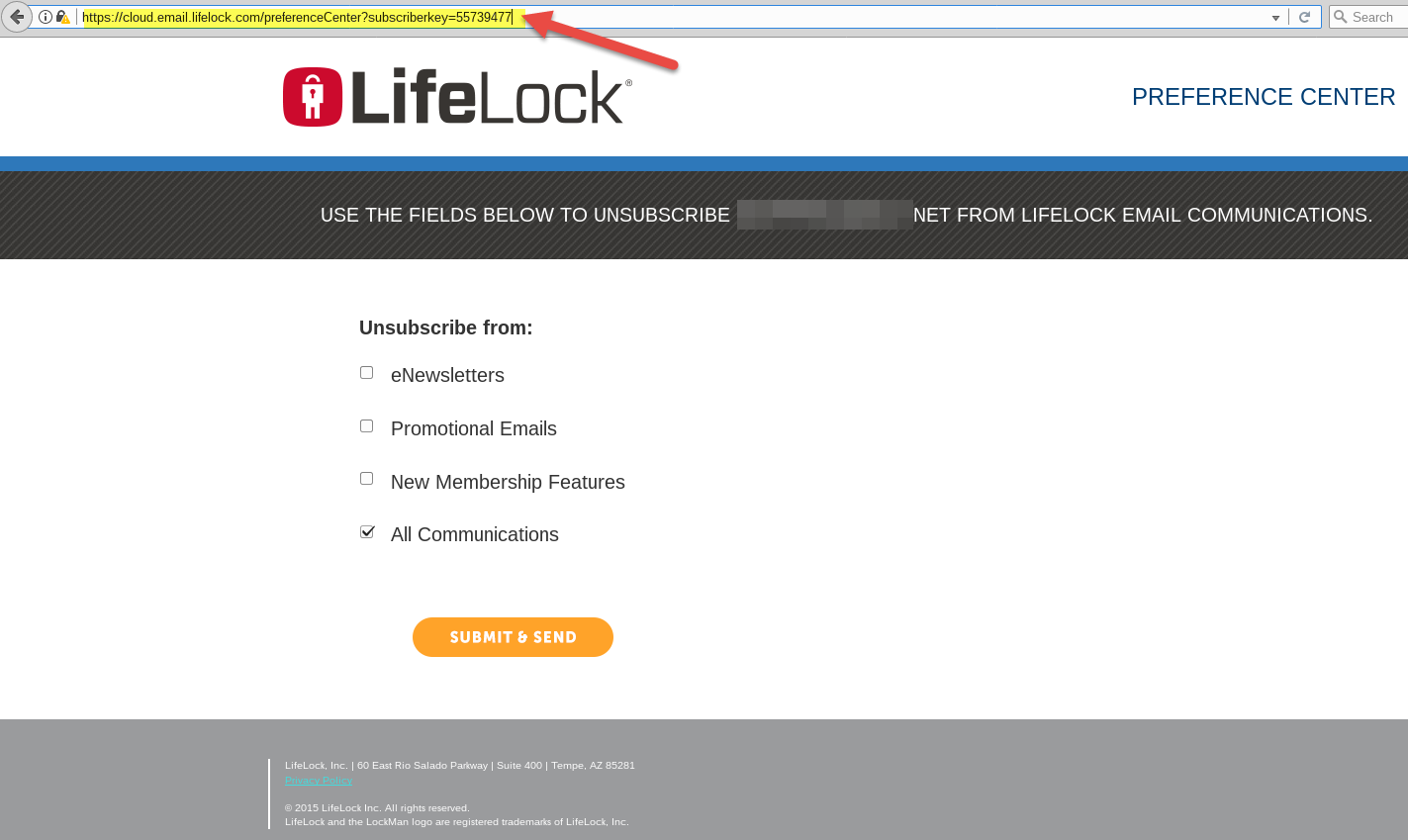
Identity theft protection firm LifeLock — a company that’s built a name for itself based on the promise of helping consumers protect their identities online — may have actually exposed customers to additional attacks from ID thieves and phishers. The company just fixed a vulnerability on its Web site that allowed anyone with a Web browser to index email addresses associated with millions of customer accounts, or to unsubscribe users from all communications from the company. The upshot of this weakness is that cyber criminals could harvest the data and use it in targeted phishing campaigns that spoof LifeLock’s brand. Of course, phishers could spam the entire world looking for LifeLock customers without the aid of this flaw, but nevertheless the design of the company’s site suggests that whoever put it together lacked a basic understanding of Web site authentication and security. The upshot of this weakness is that cyber criminals could harvest the data and use it in targeted phishing campaigns that spoof LifeLock’s brand. Of course, phishers could spam the entire world looking for LifeLock customers without the aid of this flaw, but nevertheless the design of the company’s site suggests that whoever put it together it lacked a basic understanding of authentication and security.

Read More
ComputerWorldIndependent

The MacBook Pro’s T2 chip boosts enterprise security

Credit to Author: Jonny Evans| Date: Mon, 23 Jul 2018 06:51:00 -0700

You may have missed an all-new enterprise-focused feature woven inside of Apple’s all-new MacBook Pro – its new T2 chip which fundamentally enhances the security of these computers.

What is the T2 chip?

The successor to the T1, Apple’s T2 chip enables secure boot and encrypted storage on the machine. It first appeared on the iMac Pro.

What does the T2 chip do?

The most widely-reported task handled by the T2 chip is the provision of “Hey Siri” support for the first time on a Mac.

To read this article in full, please click here

Read More
ComputerWorldIndependent

July Windows .Net patches appear, disappear, reappear, disappear again

Credit to Author: Woody Leonhard| Date: Mon, 23 Jul 2018 05:15:00 -0700

Microsoft’s July 2018 series of patching missteps, with .Net security patches in particular, have left many admins in the lurch. Less than two weeks after they were first unleashed, poorly documented versions of the patches now appear to be available, but are not being actively pushed. There’s no indication from Microsoft if and/or when they’ll be fixed.

These patches, originally released on Patch Tuesday, July 10, are baring their FAANGs:

  • KB 4340556 — Security and Quality Rollup updates for .Net Framework 3.5.1, 4.5.2, 4.6, 4.6.1, 4.6.2, 4.7, 4.7.1 and 4.7.2 for Windows 7 SP1 and Server 2008 R2 SP1
  • KB 4340557 — Security and Quality Rollup updates for .Net Framework 3.5 SP1, 4.5.2, 4.6, 4.6.1, 4.6.2, 4.7, 4.7.1, and 4.7.2 for Windows Server 2012
  • KB 4340558 — Security and Quality Rollup updates for .Net Framework 3.5 SP1, 4.5.2, 4.6, 4.6.1, 4.6.2, 4.7, 4.7.1, and 4.7.2 for Windows 8.1, RT 8.1, and Server 2012 R2
  • KB 4340559 — Security and Quality Rollup updates for .Net Framework 2.0 SP2, 3.0 SP2, 4.5.2, and 4.6 for Windows Server 2008

The patches had been out for less than a day when we started seeing error reports on AskWoody. As I noted on July 12:

To read this article in full, please click here

Read More