Credit to Author: BrianKrebs| Date: Thu, 30 May 2019 22:21:47 +0000
Canadian government regulators are using the country’s powerful new anti-spam law to pursue hefty fines of up to a million dollars against Canadian citizens suspected of helping to spread malicious software.
Credit to Author: BrianKrebs| Date: Wed, 29 May 2019 17:39:26 +0000
Would your average Internet user would be any more vigilant against phishing scams if he or she faced the real possibility of losing their job after falling for one too many of these emails? Recently, I met someone at a conference who said his employer had in fact terminated employees for such repeated infractions. As this was the first time I’d ever heard of an organization actually doing this, I asked some phishing experts what they thought (spoiler alert: they’re not fans of this particular teaching approach).
Credit to Author: BrianKrebs| Date: Fri, 24 May 2019 20:47:11 +0000
The Web site for Fortune 500 real estate title insurance giant First American Financial Corp. [NYSE:FAF] leaked hundreds of millions of documents related to mortgage deals going back to 2003, until notified this week by KrebsOnSecurity. The digitized records — including bank account numbers and statements, mortgage and tax records, Social Security numbers, wire transaction receipts, and drivers license images — were available without authentication to anyone with a Web browser.
Credit to Author: BrianKrebs| Date: Wed, 22 May 2019 19:26:04 +0000
Some of the most convincing email phishing and malware attacks come disguised as nastygrams from a law firm. Such scams typically notify the recipient that he/she is being sued, and instruct them to review the attached file and respond within a few days — or else. Here’s a look at a recent spam campaign that peppered more than 100,000 business email addresses with fake legal threats harboring malware.
Credit to Author: BrianKrebs| Date: Sat, 18 May 2019 13:44:20 +0000
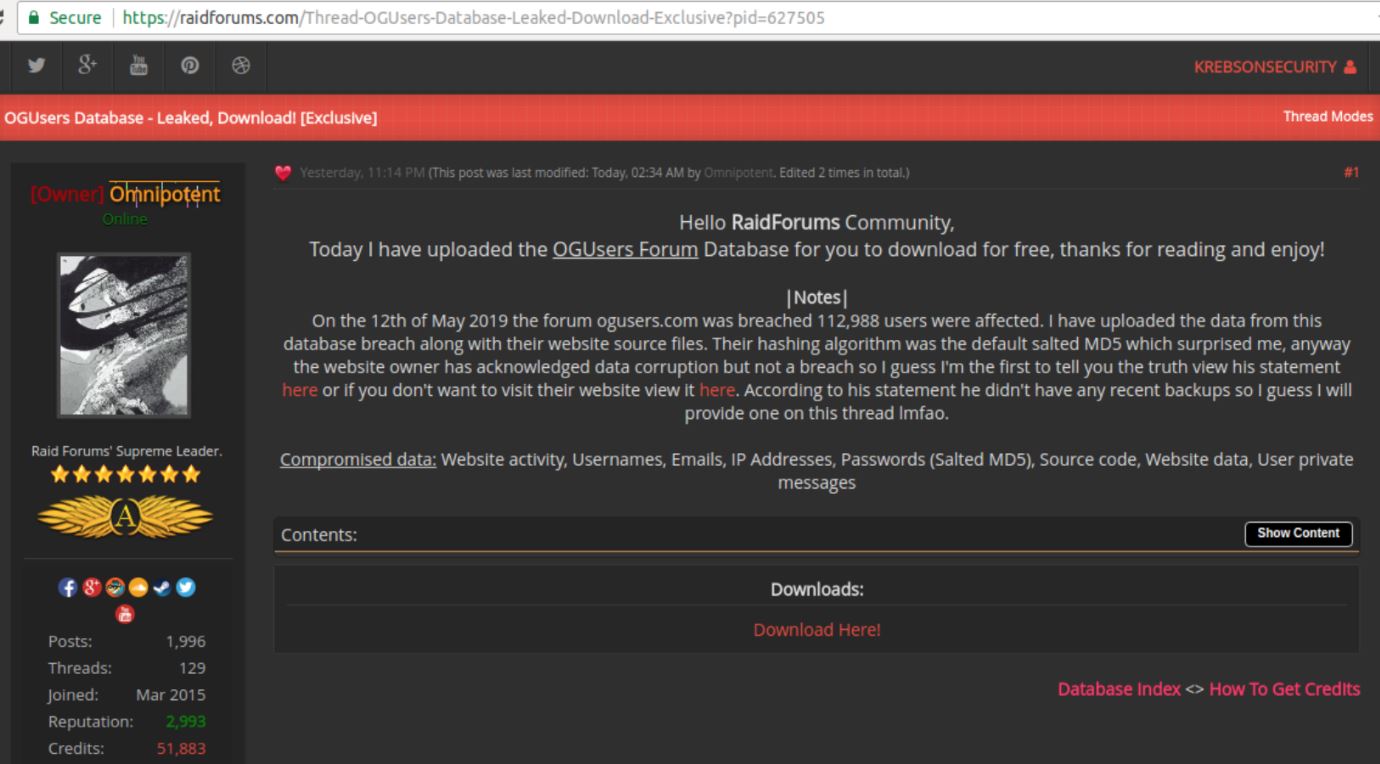
Ogusers[.]com — a forum popular among people involved in hijacking online accounts and conducting SIM swapping attacks to seize control over victims’ phone numbers — has itself been hacked, exposing the email addresses, hashed passwords, IP addresses and private messages for nearly 113,000 forum users.
Credit to Author: BrianKrebs| Date: Thu, 16 May 2019 22:05:30 +0000
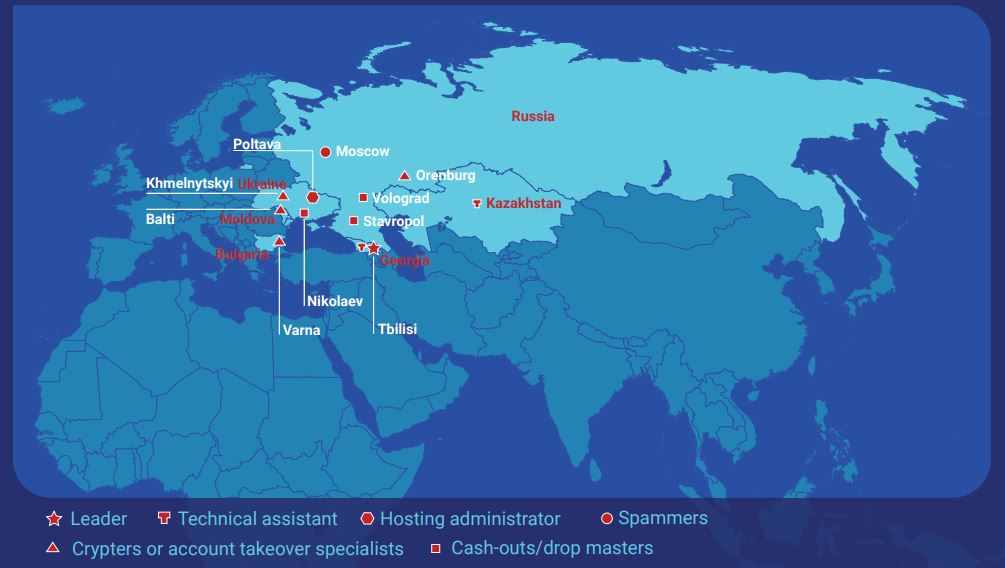
Law enforcement agencies in the United States and Europe today unsealed charges against 11 alleged members of the GozNym malware network, an international cybercriminal syndicate suspected of stealing $100 million from more than 41,000 victims with the help of a stealthy banking trojan by the same name.
Credit to Author: BrianKrebs| Date: Wed, 15 May 2019 22:09:12 +0000
In the early days of the Internet, there was a period when Internet Protocol 4 (IPv4) addresses (e.g. 4.4.4.4) were given out like cotton candy to anyone who asked. But these days companies are queuing up to obtain new IP space from the various regional registries that periodically dole out the prized digits. With the value of a single IP hovering between $15-$25, those registries are now fighting a wave of shady brokers who specialize in securing new IP address blocks under false pretenses and then reselling to spammers. Here’s the story of one broker who fought back in the courts, and lost spectacularly. On May 14, South Carolina U.S. Attorney Sherri Lydon filed criminal wire fraud charges against Amir Golestan, alleging he and his Charleston, S.C. based company Micfo LLC orchestrated an elaborate network of phony companies and aliases to gather more than 735,000 IPs from the American Registry for Internet Numbers (ARIN), a nonprofit which oversees IP addresses assigned to entities in the U.S., Canada, and parts of the Caribbean.
Credit to Author: BrianKrebs| Date: Tue, 14 May 2019 17:11:34 +0000
Microsoft today is taking the unusual step of releasing security updates for unsupported but still widely-used Windows operating systems like XP and Windows 2003, citing the discovery of a “wormable” flaw that the company says could be used to fuel a fast-moving malware threat like the WannaCry ransomware attacks of 2017. The vulnerability (CVE-2019-0709) resides in the “remote desktop services” component built into supported versions of Windows, including Windows 7, Windows Server 2008 R2, and Windows Server 2008. It also is present in computers powered by Windows XP and Windows 2003, operating systems for which Microsoft long ago stopped shipping security updates.