IndependentKrebs

Inside a Porn-Pimping Spam Botnet
Credit to Author: BrianKrebs| Date: Thu, 15 Jun 2017 14:35:27 +0000

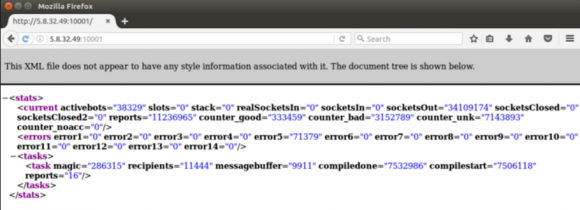
For several months I’ve been poking at a decent-sized spam botnet that appears to be used mainly for promoting adult dating sites. Having hit a wall in my research, I decided it might be good to publish what I’ve unearthed so far to see if this dovetails with any other research out there. In late October 2016, an anonymous source shared with KrebsOnSecurity.com a list of nearly 100 URLs that — when loaded into a Firefox browser — each displayed what appeared to be a crude but otherwise effective “counter” designed to report in real time how many “bots” were reporting in for duty. Here’s a set of archived screenshots of those counters illustrating how these various botnet controllers keep a running tab of how many “activebots” — hacked servers set up to relay spam — are sitting idly by and waiting for instructions.

Read More
ScadaICSSchneider

Simple Ways to Improve Hospital Efficiency – 3 Tips for Hospital Facility Managers

Credit to Author: Estelle Schweizer| Date: Thu, 15 Jun 2017 13:08:42 +0000

Rising energy costs. Tighter operating budgets. Staff spread thin and asked to do more with less. If you run a hospital, these operating constraints sound all too familiar. Facility managers… Read more »

The post Simple Ways to Improve Hospital Efficiency – 3 Tips for Hospital Facility Managers appeared first on Schneider Electric Blog.

Read More
FortinetSecurity

Higher Education: Critical Infrastructure and the Dark Cloud of Cyber Threats

Credit to Author: Susan Biddle| Date: Thu, 15 Jun 2017 13:29:00 +0000

The Department of Homeland Security (DHS) has identified 16 sectors that have been determined to be designated as critical infrastructure due to the debilitating effect on security, national economic security, national public health or safety, or any combination that would result from any of these sectors being compromised. Included in this list of 16 is the Government Facilities Sector, which covers, “a wide variety of buildings, located in the United States and overseas, that are owned or leased by federal, state, local, and tribal governments.”…

Read More
ComputerWorldIndependent

Rogue cell phone surveillance gives rise to mobile threat defense

Credit to Author: Lucas Mearian| Date: Thu, 15 Jun 2017 03:01:00 -0700

Researchers have created a device using off-the-shelf components that can sniff out controversial cell phone surveillance devices, known as IMSI-catchers or StingRays, used by federal and state law enforcement as well as hackers.

The International Mobile Subscriber Identity-catchers have not only been used to locate mobile devices but also to sometimes eavesdrop on users, send spam or upload malware, according to University of Washington (UW) security researchers.

“The threats remain the same when looking at enterprises: tracking and, under certain circumstances, eavesdropping are possible through this attack,” said Dionisio Zumerle, a Gartner research director for Mobile Security. “The attack requires technical expertise and equipment that was once hard to find; today it is easier and that is the main source of concern.”

To read this article in full or to leave a comment, please click here

Read More