ComputerWorldIndependent

Researcher develops ransomware attack that targets water supply

Credit to Author: Michael Kan| Date: Tue, 14 Feb 2017 04:35:00 -0800

A security researcher is showing that it’s not hard to hold industrial control systems for ransom. He’s experimented with a simulated water treatment system based on actual programmable logic controllers (PLCs) and documented how these can be hacked.

David Formby, a PhD student at Georgia Institute of Technology, conducted his experiment to warn the industry about the danger of poorly secured PLCs. These small dedicated computers can be used to control important factory processes or utilities, but are sometimes connected to the internet.

For instance, Formby found that 1,500 of these industrial PLCs are accessible online, he said while speaking at the RSA cybersecurity conference on Monday. It’s not hard to imagine a hacker trying to exploit these exposed PLCs, he added. Cybercriminals have been infecting businesses across the world with ransomware, a form of malware that can hold data hostage in exchange for bitcoin.

To read this article in full or to leave a comment, please click here
Read More
ComputerWorldIndependent

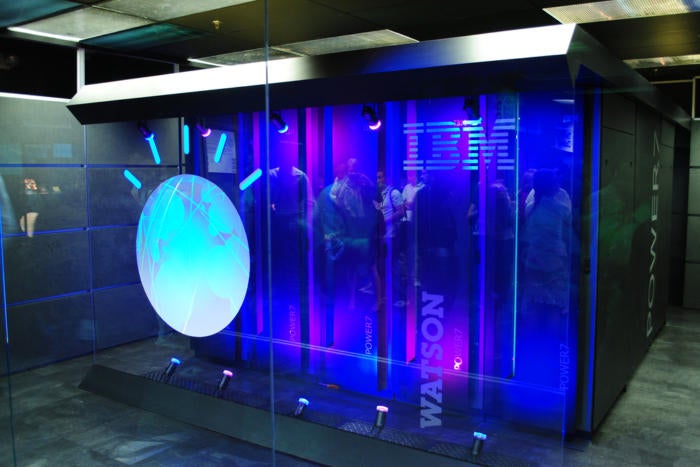
IBM Watson: Regular A.I. by day, cybercrime fighter by night

Credit to Author: Rebecca Linke| Date: Tue, 14 Feb 2017 04:11:00 -0800

IBM Watson is an artificial intelligence of many talents. 

It can win Jeopardy!, help find treatment for cancer patients — and now it can find cyberthreats. That’s right, Watson is becoming a cybersecurity expert. So how has IBM helped Watson change hats?

In IT Blogwatch, this reminds us of something.

So what is going on? Alison DeNisco has some background:

IBM Watson has a new job: Cybersecurity specialist. At the RSA Conference…IBM announced the availability of Watson for Cyber Security, with the aim of assisting cybersecurity professionals with threat assessment and mitigation…The company said it is the industry’s first augmented intelligence technology with the ability to power cognitive security operations centers (SOCs).

But what need does Watson fill here? Ian Barker has those details:

To read this article in full or to leave a comment, please click here

Read More
ComputerWorldIndependent

Worried about hacks, senators want info about Trump’s personal phone

Credit to Author: John Ribeiro| Date: Tue, 14 Feb 2017 03:09:00 -0800

Two senators have written to the U.S. Department of Defense about reports that President Donald Trump may still be using an old unsecured Android phone, including to communicate through his Twitter account.

“While it is important for the President to have the ability to communicate electronically, it is equally important that he does so in a manner that is secure and that ensures the preservation of presidential records,” Tom Carper, a Democrat from Delaware, and Claire McCaskill, a Democrat from Missouri, wrote in the letter, which was made public Monday.

To read this article in full or to leave a comment, please click here

Read More
ComputerWorldIndependent

NASA scientist detained at U.S. border until handing over PIN to unlock his phone

Credit to Author: Darlene Storm| Date: Mon, 13 Feb 2017 06:17:00 -0800

Sidd Bikkannavar understands that his last name may sound foreign, but he is a natural-born U.S. citizen who has been working at NASA’s Jet Propulsion Lab for 10 years. He was flagged by U.S. Customs and Border Protection (CBP) for extra scrutiny when returning to the U.S. from Patagonia where his vacation consisted of racing solar-powered cars.

After his passport was scanned at George Bush Intercontinental Airport in Houston, Bikkannavar was detained by CBP until he handed over the PIN to his government-issued phone.

At first, the border agent asked him questions that CBP already knew the answers to since Bikkannavar is enrolled in CPB’s Global Entry program which gives “pre-approved, low-risk travelers” expedited entry into the U.S.; before being approved for the program, CBP says “all applicants undergo a rigorous background check and in-person interview before enrollment.”

To read this article in full or to leave a comment, please click here

Read More
ComputerWorldIndependent

Experts worry that ransomware could hit critical infrastructure

Credit to Author: Michael Kan| Date: Mon, 13 Feb 2017 13:14:00 -0800

Expect ransomware to grow more aggressive in the coming years, including higher ransom payments and attempts to go beyond attacking data — by shutting down entire computer systems to utilities or factories.

“I see no reason for ransomware to stop,” said Neil Jenkins, an official with the U.S. Department of Homeland Security. “It’s shown to be effective.”

On Monday at the RSA cybersecurity conference, experts gave a grim outlook on the future of ransomware, which they fear will spread. Through the attacks, cybercriminals have already managed to rake in US$1 billion last year, according to one estimate.

To read this article in full or to leave a comment, please click here

Read More