Android

MalwareBytesSecurity

Mobile Menace Monday: Preinstalled adware and sometimes worse

Credit to Author: Nathan Collier| Date: Mon, 27 Mar 2017 16:00:52 +0000

BLU manufactured mobile devices have been discovered with preinstalled adware known as Android/Adware.YeMobi.

Categories:

Tags:

(Read more…)

The post Mobile Menace Monday: Preinstalled adware and sometimes worse appeared first on Malwarebytes Labs.

Read More
ComputerWorldIndependent

Google Play faces cat-and-mouse game with Android malware

Credit to Author: Michael Kan| Date: Fri, 24 Mar 2017 11:16:00 -0700

What’s the best way to avoid Android malware? Downloading all your apps from the Google Play store — where software is vetted – is perhaps the best advice.  

But that doesn’t mean Google Play is perfect.

Security researchers do find new Android malware lurking on Google’s official app store. That’s because hackers are coming up with sneaky ways to infiltrate the platform, despite the vetting processes that protect it.

“Eventually, every wall can be breached,” said Daniel Padon, a researcher at mobile security provider Check Point.

To be sure, most Android users will probably never encounter malware on the Google Play store. Last year, the amount of malicious software that reached the platform amounted to only 0.16 percent of all apps, according to a new report from Google.

To read this article in full or to leave a comment, please click here

Read More
ComputerWorldIndependent

Google: Half of Android devices haven’t been patched in a year or more

Credit to Author: Gregg Keizer| Date: Thu, 23 Mar 2017 12:41:00 -0700

Google engineers yesterday acknowledged that half of all Android devices had not received a security update in the past year, even as they argued that the firm has made progress in streamlining the open-source operating system’s patching process.

“About half of devices in use at the end of 2016 had not received a platform security update in the previous year,” Adrian Ludwig and Mel Mille, members of the Android security team, said in a post to a company blog.

Although Google has issued monthly security updates for Android since 2015 — and deploys those patches to Nexis and Pixel devices as soon as they’re available — other device makers often take weeks or months to push updates to customers, or never do. Android’s update problem is not new — it’s been in stark contrast to other operating systems, notably iOS, macOS and Windows, since Android’s inception — and is baked into the relationship between Google and the hardware manufacturers who build and sell phones.

To read this article in full or to leave a comment, please click here

Read More
ComputerWorldIndependent

Google cites progress in Android security, but patching issues linger

Credit to Author: Michael Kan| Date: Wed, 22 Mar 2017 12:41:00 -0700

The chances of your encountering malware on your Android phone is incredibly small, according to Google.

By the end of last year, less than 0.71 percent of Android devices had installed a “potentially harmful application,” such as spyware, a Trojan, or other malicious software.

That figure was even lower, at 0.05 percent, for Android phones that downloaded apps exclusively from the Google Play store.

The internet giant revealed the figures in a new report detailing its efforts to making the Android OS secure. Thanks to better app review systems, the company is detecting and cracking down on more malware.

To read this article in full or to leave a comment, please click here

Read More
ComputerWorldIndependent

BlackBerry preps a more secure Samsung Galaxy S7

Credit to Author: Peter Sayer| Date: Sun, 19 Mar 2017 10:58:00 -0700

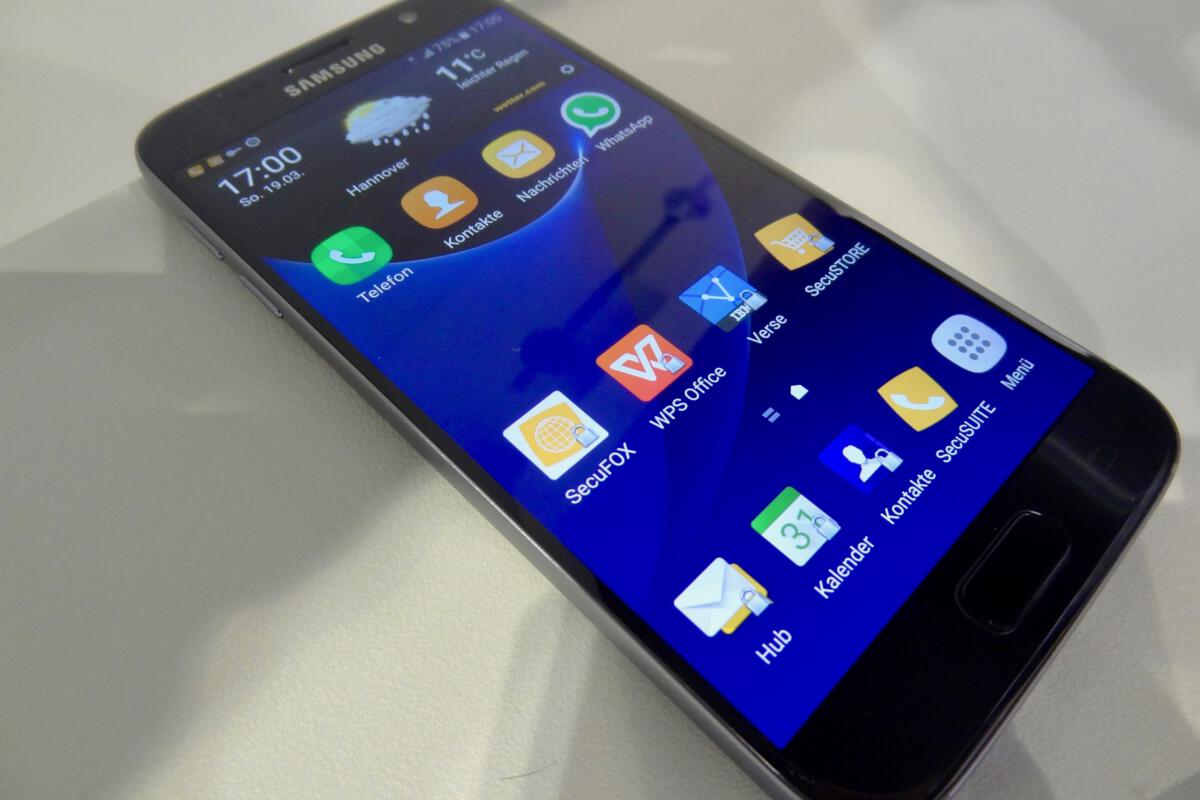
Secusmart, the BlackBerry subsidiary that secures the German Chancellor Angela Merkel’s smartphone, will roll out a version of its SecuSuite security software compatible with Samsung Electronics’ Knox platform later this year.

That means that organizations looking for smartphones offering government-grade security will be able to buy the Samsung Galaxy S7 or, soon, the S8 rather than the now-discontinued BlackBerry OS smartphones like the one Merkel uses.

In addition to encrypting communications and data stored on the device, the new SecuSuite also secures voice calls using the SNS standard set by Germany’s Federal Office for Information Security (BSI). Organizational app traffic is passed through an IPsec VPN, while data from personal apps can go straight to the internet. Encrypted voice calls go through a different gateway, not the VPN.

To read this article in full or to leave a comment, please click here

Read More
ComputerWorldIndependent

Android devices coming with preinstalled malware

Credit to Author: Darlene Storm| Date: Mon, 13 Mar 2017 07:52:00 -0700

The phone, given to you by your company, could be targeted at some point and end up with a malware infection, but you wouldn’t expect the malware to be preinstalled “somewhere along the supply chain.” Yet preinstalled malware is precisely what one security vendor found on 38 Android devices.

Check Point Software Technologies did not name the affected companies, saying only that the phones belonged to “a large telecommunications company” and “a multination technology company.” A good chunk of the infected phones were Samsung models, but phones by Lenovo, LG, Asus, ZTE, Vivo, Oppo and Xiaomi were also preinstalled with malware after leaving the manufacturers but before landing in the hands of the companies’ employees.

To read this article in full or to leave a comment, please click here

Read More