How the ‘Star Trek’ Punch Became the Worst Fight Move on TV

Credit to Author: Jordan Pearson| Date: Tue, 19 Sep 2017 13:00:00 +0000
And yet, it’s totally iconic.
Read MoreRSS Reader for Computer Security Articles
Credit to Author: Jordan Pearson| Date: Tue, 19 Sep 2017 13:00:00 +0000
And yet, it’s totally iconic.
Read More
Credit to Author: Caroline Haskins| Date: Tue, 19 Sep 2017 12:00:00 +0000
I entered a fragile world of UV-sensitive research, nylon clean suits, and beard covers.
Read More
Credit to Author: Woody Leonhard| Date: Mon, 18 Sep 2017 05:22:00 -0700
If you installed the free version of CCleaner after Aug. 15, a couple of nasty programs came along for the ride. Talos Intelligence, a division of Cisco, just published a damning account of malware that it found hiding in the installer for CCleaner 5.33, the version that was released on Aug. 15 and which, according to Talos, was still the primary download on the official CCleaner page on Sept. 11.
After notifying Piriform, CCleaner was, ahem, cleaned up and version 5.34 appeared on Sept. 12.
I just checked, and the current version available from Piriform is version 5.34. (Piriform was bought by antivirus giant Avast in July.)
To read this article in full or to leave a comment, please click here
Credit to Author: Evan Schuman| Date: Mon, 18 Sep 2017 03:00:00 -0700
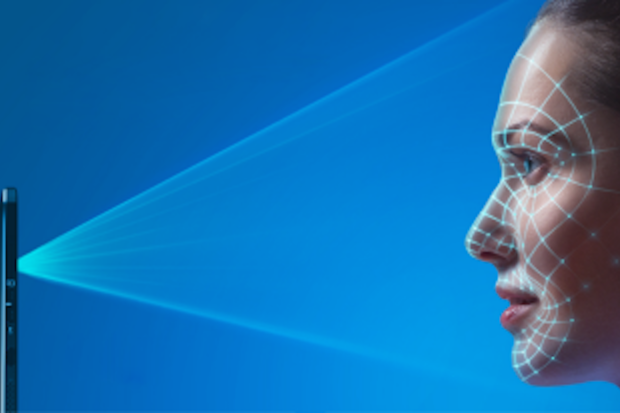
When Apple announced the iPhone X last week, the most sophisticated (and widely predicted) feature revealed was the facial recognition approach, called Face ID. But by choosing to go all or nothing with the iPhone X — it’s only Face ID, with no support for Touch ID — the big risk for Apple was that all the companies that support Touch ID in their apps wouldn’t quickly make the move to Face ID. So Apple made the decision for them.
As the recent healthcare debate in the U.S. demonstrated, it’s extremely hard to take back something people have grown to like. Apple’s choice of biometric authentication faced the same problem. If Amazon, Chase, Fidelity or any of the other major companies whose apps use Touch ID as a way to log in without a password failed to move to Face ID, their customers would have been forced to go back to typing in long passwords. Apple, ever mindful of customer experience, chose to not permit that to happen. To make sure companies use Face ID in their apps, Apple simply didn’t give them any practical choice.
To read this article in full or to leave a comment, please click here

Credit to Author: SSD / Maor Schwartz| Date: Sun, 17 Sep 2017 09:02:04 +0000
Vulnerability Summary The following advisory describes an authentication bypass found in NEXXT routers. NEXXT Connectivity Solutions develops “state of the art networking devices that help connect people and things together, at home, the office and virtually everywhere”. Credit An independent security researcher, Netfairy, has reported this vulnerability to Beyond Security’s SecuriTeam Secure Disclosure program Vendor … Continue reading SSD Advisory – NEXXT Authentication Bypass
Read More
Credit to Author: Jason Koebler| Date: Mon, 18 Sep 2017 17:00:00 +0000
“Is B.o.B. nerdcore?”
Read More
Credit to Author: Michael Byrne| Date: Mon, 18 Sep 2017 16:50:24 +0000
D-Wave’s quantum annealers face a fundamental limitation when it comes to scaling: temperature.
Read More
Credit to Author: Lorenzo Franceschi-Bicchierai| Date: Mon, 18 Sep 2017 16:29:21 +0000
Peter Sunde is giving Catalan independence activists free, anonymous hosting and domain names to avoid Spanish government censorship.
Read More