ComputerWorld

ComputerWorldIndependent

Intel says new firmware patches trigger reboots in Haswell and Broadwell systems

Credit to Author: Woody Leonhard| Date: Fri, 12 Jan 2018 05:18:00 -0800

The headlong race to cover the Meltdown/Spectre debacle has claimed another victim. In a surprising move, Intel has raised a red flag about some of its firmware patches. What should you do? Wait.

Yesterday, Intel executive VP Navin Shenoy posted on the company blog:

We have received reports from a few customers of higher system reboots after applying firmware updates. Specifically, these systems are running Intel Broadwell and Haswell CPUs for both client and data center. We are working quickly with these customers to understand, diagnose and address this reboot issue. If this requires a revised firmware update from Intel, we will distribute that update through the normal channels.
To read this article in full, please click here

Read More
ComputerWorldIndependent

CES 2018: The top 9 new products for the enterprise

Credit to Author: Peter Sayer| Date: Fri, 12 Jan 2018 08:24:00 -0800

Alexa on Windows 10 PCs at CES 2018
hp alexa

Image by HP

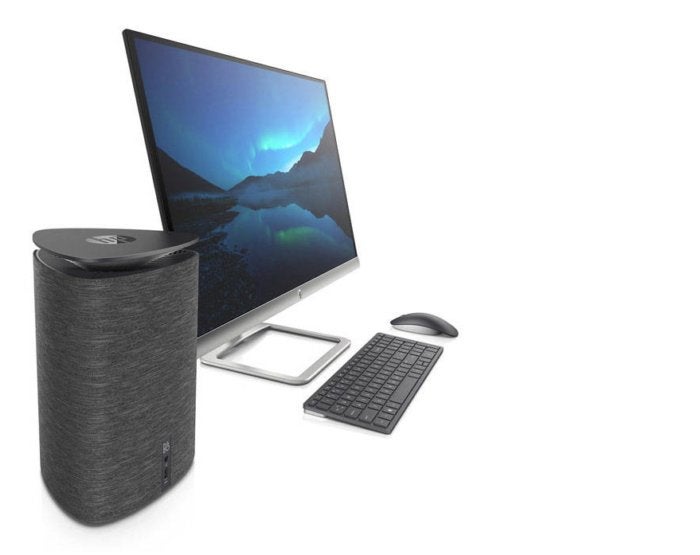
At CES 2018 everyone was talking about – or talking to – Amazon.com’s Alexa digital assistant. It’s omnipresent – around the home and in phones, cars and, increasingly, offices. You’ll probably even find it in your next Windows 10 PC. It’s already in the new HP Pavilion Wave small form-factor PC (pictured); the Aspire, Spin, Switch and Swift notebooks from Acer; the 2018 ZenBook and VivoBook from Asus, and the Thinkpad X1 Carbon and Yoga devices from Lenovo.

To read this article in full, please click here

Read More
ComputerWorldIndependent

Microsoft reinstates Meltdown/Spectre patches for some AMD processors — but which ones?

Credit to Author: Woody Leonhard| Date: Thu, 11 Jan 2018 09:38:00 -0800

As we rappel down the Patch Tuesday rabbit hole this month, Microsoft just announced that it’s going to start pushing its January Windows security patches onto AMD processors again. But it neglects to mention which ones. Per a late-night change to KB 4073707:

Microsoft has resumed updating the majority of AMD devices with the Windows operating system security update to help protect against the chipset vulnerabilities known as Spectre and Meltdown.

To read this article in full, please click here

Read More
ComputerWorldIndependent

Windows 7 takes biggest performance hit from emergency Meltdown, Spectre updates

Credit to Author: Gregg Keizer| Date: Thu, 11 Jan 2018 05:09:00 -0800

Microsoft said Tuesday that Windows 7 PCs would run slower after receiving and installing the crash updates designed to stymie attacks that leverage the recently-disclosed vulnerabilities in virtually every in-use microprocessor.

But for Windows 10, a Microsoft executive said, “We don’t expect most users to notice a change because these [slowdown] percentages are reflected in milliseconds.”

The contrast, general though it was, came from Terry Myerson, who leads the company’s Windows group.

“With Windows 10 on newer silicon (2016-era PCs with Skylake, Kaby Lake or newer CPU), benchmarks show single-digit slowdowns,” Myerson wrote in a Tuesday post to a Microsoft blog. Skylake and Kaby Lake were the codenames for the Intel processors launched in 2015 and 2016, respectively. The bulk of new personal computers sold in 2016 and 2017 were equipped with Skylake or Kaby Lake CPUs (central processor units).

To read this article in full, please click here

Read More
ComputerWorldIndependent

A mess of Microsoft patches, warnings about slowdowns — and antivirus proves crucial

Credit to Author: Woody Leonhard| Date: Wed, 10 Jan 2018 09:22:00 -0800

Welcome to another banner Patch Tuesday. Microsoft yesterday released 56 separately identified security patches for every supported version of Windows, Office, .Net, Internet Explorer and Edge. Out of that monstrous pile, only one patch cures a currently exploited problem — a flaw in Word’s Equation Editor that should have been fixed in November.

If you’re a “normal” user, your first priority shouldn’t be Microsoft’s patches, notwithstanding the fabulous PR job performed on Meltdown and Spectre’s behalf. Assuming you don’t open random Word docs with dicey embedded equations, your main concern right now should be getting your antivirus house in order.

To read this article in full, please click here

Read More
ComputerWorldIndependent

Microsoft sets novel antivirus prerequisite before offering Windows emergency updates

Credit to Author: Gregg Keizer| Date: Wed, 10 Jan 2018 05:03:00 -0800

Microsoft last week took the unprecedented step of requiring customers to have up-to-date antivirus software on their personal computers before it would hand over a critical security update.

“This was unique,” said Chris Goettl, product manager with client security and management vendor Ivanti. “But there was a danger here.”

Goettl was talking about the emergency updates Microsoft issued last week to bolster Windows’ defenses against potential attacks leveraging the vulnerabilities labeled Meltdown and Spectre by researchers. Operating system and browser makers have shipped updates designed to harden systems against the vulnerabilities, which stemmed from design flaws in modern processors from companies such as Intel, AMD and ARM.

To read this article in full, please click here

Read More
ComputerWorldIndependent

How blockchain makes self-sovereign identities possible

Credit to Author: Phillip Windley| Date: Wed, 10 Jan 2018 03:12:00 -0800

One of the curious constructions of the Internet is the term identity provider. You don’t need anyone to provide you with an identity, of course. You have an innate one by virtue of being human. Rather, so-called identity providers, or IDPs, provide you with an identifier, a means of recording attributes important to that provider, and some method of proving it’s you – usually a password.

This is not surprising since online identity has traditionally been viewed through the lens of an organization and its needs, not the individual and his or her needs. Identity systems are created to administer identifiers and attributes within a specific domain. The result: people end up with hundreds of online personas at hundreds of organizations. Each of these administrative identity systems is proprietary and owned by the organization that provides it; you really don’t have an online identity that’s independent of these many systems. Got a new address, or an updated credit card number? You’ll have to deal with each of these systems one at a time in whatever manner they require.

To read this article in full, please click here

Read More
ComputerWorldIndependent

How to protect Windows 10 PCs from ransomware

Credit to Author: Preston Gralla| Date: Wed, 10 Jan 2018 03:00:00 -0800

CryptoLocker. WannaCry. Petya. Bad Rabbit. The ransomware threat isn’t going away anytime soon; the news brings constant reports of new waves of this pernicious type of malware washing across the world. It’s popular in large part because of the immediate financial payoff for attackers: It works by encrypting the files on your hard disk, then demands that you pay a ransom, frequently in Bitcoins, to decrypt them.

To read this article in full, please click here

(Insider Story)

Read More