Independent

ComputerWorldIndependent

Microsoft issues first Windows XP patch in 3 years to stymie 'WannaCrypt'

Credit to Author: Gregg Keizer| Date: Sun, 14 May 2017 11:00:00 -0700

Microsoft on Friday took the unprecedented step of issuing patches for long-demoted versions of Windows, including Windows XP, to immunize PCs from fast-spreading ransomware that has crippled machines worldwide.

To stymie “WannaCrypt” attacks — which encrypted files on thousands of PCs used by the U.K.’s National Health Service (NHS), causing chaos in many hospitals — Microsoft published patches for Windows XP, Windows 8 and Windows Server 2003. All had been retired from support: Windows XP in April 2014, Windows 8 in June 2016, Windows Server in July 2015.

“We are taking the highly unusual step of providing a security update for all customers to protect Windows platforms that are in custom support only, including Windows XP, Windows 8, and Windows Server 2003,” said Phillip Misner, a principal security group manager at the Microsoft Security Response Center (MSRM), in a post to a company blog late Friday.

To read this article in full or to leave a comment, please click here
Read More
IndependentKrebs

Global ‘Wana’ Ransomware Outbreak Earned Perpetrators $26,000 So Far

Credit to Author: BrianKrebs| Date: Sat, 13 May 2017 20:10:43 +0000

As thousands of organizations work to contain and clean up the mess from this week’s devastating Wana ransomware attack, the fraudsters responsible for releasing the digital contagion are no doubt counting their earnings and congratulating themselves on a job well done. But according to a review of the Bitcoin addresses hard-coded into Wana, it appears the perpetrators of what’s being called the worst ransomware outbreak ever have made little more than USD $26,000 so far from the scam.

Read More
ComputerWorldIndependent

'Kill switch' helps slow the spread of WannaCry ransomware

Credit to Author: Michael Kan| Date: Fri, 12 May 2017 18:24:00 -0700

Friday’s unprecedented ransomware attack may have stopped spreading to new machines — at least briefly — thanks to a “kill switch” that a security researcher has activated.

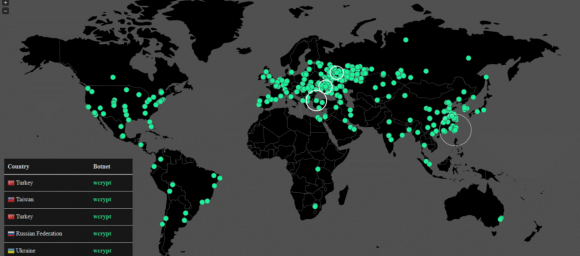
The ransomware, called Wana Decryptor or WannaCry, has been found infecting machines across the globe. It works by exploiting a Windows vulnerability that the U.S. National Security Agency may have used for spying.

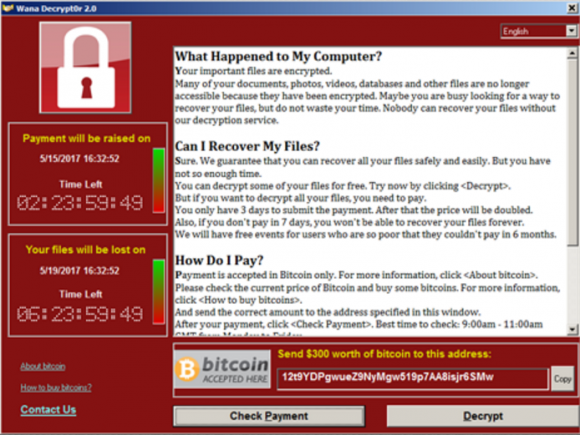
The malware encrypts data on a PC and shows users a note demanding $300 in bitcoin to have their data decrypted. Images of the ransom note have been circulating on Twitter. Security experts have detected tens of thousands of attacks, apparently spreading over LANs and the internet like a computer worm.

To read this article in full or to leave a comment, please click here
Read More
ComputerWorldIndependent

Microsoft posts PowerShell script that spawns pseudo security bulletins

Credit to Author: Gregg Keizer| Date: Fri, 12 May 2017 11:48:00 -0700

A Microsoft manager this week offered IT administrators a way to replicate — in a fashion — the security bulletins the company discarded last month.

“If you want a report summarizing today’s #MSRC security bulletins, here’s a script that uses the MSRC Portal API,” John Lambert, general manager of the Microsoft Threat Intelligence Center, said in a Tuesday message on Twitter.

Lambert’s tweet linked to code depository GitHub, where he posted a PowerShell script that polled data using a new API (application programming interface). Microsoft made the API available in November when it first announced that it planned to axe the security bulletins it had issued since at least 1998.

To read this article in full or to leave a comment, please click here

Read More
ComputerWorldIndependent

Ransomware attack spreads worldwide using alleged NSA exploit

Credit to Author: Michael Kan| Date: Fri, 12 May 2017 10:27:00 -0700

A ransomware attack appears to be spreading around the world, leveraging a hacking tool that may have come from the U.S. National Security Agency.

The ransomware, called Wanna Decryptor, struck hospitals at the U.K.’s National Health Service on Friday, taking down some of its network.

Spain’s computer response team, CCN-CERT, has also warned of  a “massive attack” from the ransomware strain, amid reports that local telecommunications firm Telefonica was hit.

To read this article in full or to leave a comment, please click here

Read More
ComputerWorldIndependent

IDG Contributor Network: May Patch Tuesday delivers fixes critical Windows 10 exploits

Credit to Author: Greg Lambert| Date: Fri, 12 May 2017 10:29:00 -0700

For this May Microsoft Patch Tuesday, we see Microsoft attempt to resolve 56 reported vulnerabilities in Microsoft Office, Windows, both Browsers and the .NET development platform.

Three of the vulnerabilities have been reported publicly and several have been actively exploited. Adding to an already serious situation, Microsoft’s anti-malware tool was compromised, resulting in the inadvertent deployment of malware through the anti-malware engine.

Microsoft responded very quickly with an out-of-band update (Security Advisory 4022344). Though there was general relief and kudos to Microsoft for their rapid response to this embarrassing episode, this bug was described as the “worst in recent memory” and as “crazy bad” by two of the lead researchers from Google’s Project Zero.

To read this article in full or to leave a comment, please click here

Read More
ComputerWorldIndependent

A ransomware attack is spreading worldwide, using alleged NSA exploit

Credit to Author: Michael Kan| Date: Fri, 12 May 2017 10:27:00 -0700

A ransomware attack appears to be spreading around the world, leveraging a hacking tool that may have come from the U.S. National Security Agency.

The ransomware, called Wanna Decryptor, struck hospitals at the U.K.’s National Health Service on Friday, taking down some of its network.

Spain’s computer response team, CCN-CERT, has also warned of  a “massive attack” from the ransomware strain, amid reports that local telecommunications firm Telefonica was hit.

To read this article in full or to leave a comment, please click here

Read More