Independent

ComputerWorldIndependent

Customers roast Microsoft over security bulletins' demise

Credit to Author: Gregg Keizer| Date: Mon, 24 Apr 2017 11:49:00 -0700

When Microsoft asked customers last week for feedback on the portal that just replaced the decades-long practice of delivering detailed security bulletins, it got an earful from unhappy users.

“Hate hate hate the new security bulletin format. HATE,” emphasized Janelle 322 in a support forum where Microsoft urged customers to post thoughts on the change. “I now have to manually transcribe this information to my spreadsheet to disseminate to my customers. You have just added 8 hours to my workload. Thanks for nothing.”

To read this article in full or to leave a comment, please click here
Read More
ComputerWorldIndependent

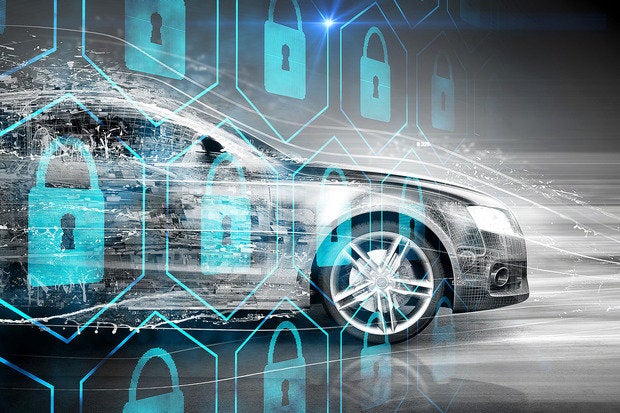
Researchers remotely kill the engine of a moving car by hacking vulnerable car dongle

Credit to Author: Darlene Storm| Date: Mon, 24 Apr 2017 09:54:00 -0700

Israeli firm Argus Cyber Security recently reported that it had been able to remotely “take control of a car via Bluetooth” thanks to vulnerabilities in the Bosch Drivelog Connect OBD-II dongle.

While the hack wouldn’t affect 90 percent of cars and produce an army of “zombie cars” like was pulled off by cyber-terrorist Cipher (Charlize Theron) in the eighth installment of the Fast and Furious series, Argus researchers were able to remotely kill the engine of a moving car.

Famed car-hacker Charlie Miller isn’t too worried about a Fate of the Furious type of car hacking at this point. Bad guys remotely taking control of cars by hacking may currently be something we only see done in the movies, but the CIA was interested in hacking cars for what WikiLeaks claimed could be used to pull off “nearly undetectable assassinations.” 

To read this article in full or to leave a comment, please click here

Read More
ComputerWorldIndependent

Russian man receives longest-ever prison sentence in the U.S. for hacking

Credit to Author: Lucian Constantin| Date: Mon, 24 Apr 2017 08:17:00 -0700

A 32-year-old Russian hacker was sentenced to 27 years in prison in the U.S. for stealing millions of payment card details from businesses by infecting their point-of-sale systems with malware.

The sentence is the longest ever handed out in the U.S. for computer crimes, surpassing the 20-year jail term imposed on American hacker and former U.S. Secret Service informant Albert Gonzalez in 2010 for similar credit card theft activities.

Roman Valeryevich Seleznev, a Russian citizen from Vladivostok, was sentenced Friday in the Western District of Washington after he was found guilty in August of 10 counts of wire fraud, eight counts of intentional damage to a protected computer, nine counts of obtaining information from a protected computer, nine counts of possession of 15 or more unauthorized access devices and two counts of aggravated identity theft.

To read this article in full or to leave a comment, please click here

Read More
IndependentKrebs

The Backstory Behind Carder Kingpin Roman Seleznev’s Record 27 Year Prison Sentence

Credit to Author: BrianKrebs| Date: Mon, 24 Apr 2017 16:37:23 +0000

Roman Seleznev, a 32-year-old Russian cybercriminal and prolific credit card thief, was sentenced Friday to 27 years in federal prison. That is a record punishment for hacking violations in the United States and by all accounts one designed to send a message to criminal hackers everywhere. But a close review of the case suggests that Seleznev’s record sentence was severe in large part because the evidence against him was substantial and yet he declined to cooperate with prosecutors prior to his trial. The son of an influential Russian politician, Seleznev made international headlines in 2014 after he was captured while vacationing in The Maldives, a popular vacation spot for Russians and one that many Russian cybercriminals previously considered to be out of reach for western law enforcement agencies. He was whisked away to Guam briefly before being transported to Washington state to stand trial for computer hacking charges.

Read More
ComputerWorldIndependent

Russian man receives longest-ever prison sentence in the US for hacking

Credit to Author: Lucian Constantin| Date: Mon, 24 Apr 2017 08:17:00 -0700

A 32-year-old Russian hacker was sentenced to 27 years in prison in the U.S. for stealing millions of payment card details from businesses by infecting their point-of-sale systems with malware.

The sentence is the longest ever handed out in the U.S. for computer crimes, surpassing the 20-year jail term imposed on American hacker and former U.S. Secret Service informant Albert Gonzalez in 2010 for similar credit card theft activities.

Roman Valeryevich Seleznev, a Russian citizen from Vladivostok, was sentenced Friday in the Western District of Washington after he was found guilty in August of 10 counts of wire fraud, eight counts of intentional damage to a protected computer, nine counts of obtaining information from a protected computer, nine counts of possession of 15 or more unauthorized access devices and two counts of aggravated identity theft.

To read this article in full or to leave a comment, please click here

Read More
ComputerWorldIndependent

FAQ: What is blockchain and how can it help business?

Credit to Author: Lucas Mearian| Date: Mon, 24 Apr 2017 03:01:00 -0700

Blockchain sounds like a way to keep boats anchored, which isn’t a bad analogy, considering what the technology purports to do.

While some IT experts herald it as a groundbreaking way of creating a distributed, unchangeable record of transactions, others question the nascent technology’s usefulness in the enterprise, which has traditionally relied on centrally-administered databases to secure digital records.

Even so, companies are moving fast to try and figure out how they can use it to save time and money. And IT vendors are responding to customers calls for info, with some already looking to include it as part of their services.

To read this article in full or to leave a comment, please click here

Read More
ComputerWorldIndependent

There's now a tool to test for NSA spyware

Credit to Author: Michael Kan| Date: Sat, 22 Apr 2017 04:43:00 -0700

Has your computer been infected with a suspected NSA spying implant? A security researcher has come up with a free tool that can tell.

Luke Jennings of security firm Countercept wrote a script in response to last week’s high-profile leak of cyberweapons that some researchers believe are from the National Security Agency. It’s designed to detect an implant called Doublepulsar, which is delivered by many of the Windows-based exploits found in the leak and can be used to load other malware.

The script, which requires some programming skill to use, is available for download on GitHub.

To read this article in full or to leave a comment, please click here

Read More