Independent

ComputerWorldIndependent

Latest WikiLeaks dump exposes CIA methods to mask malware

Credit to Author: Michael Kan| Date: Fri, 31 Mar 2017 14:51:00 -0700

WikiLeaks may have dealt another blow to the CIA’s hacking operations by releasing files that allegedly show how the agency was masking its malware attacks.

On Friday, the site dumped the source code to the Marble Framework, a set of anti-forensic tools that WikiLeaks claims the CIA used last year.

The files do appear to show “obfuscation techniques” that can hide CIA-developed malicious coding from detection, said Jake Williams, a security researcher at Rendition InfoSec, who has been examining the files.

Every hacker, from the government-sponsored ones to amateurs, will use their own obfuscation techniques when developing malware, he said.

To read this article in full or to leave a comment, please click here

Read More
ComputerWorldIndependent

Tech to help protect Final Four crowds

Credit to Author: Matt Hamblen| Date: Fri, 31 Mar 2017 13:06:00 -0700

At this weekend’s Final Four college basketball tournament, sophisticated technology is in place to help public safety officials monitor crowds, vehicles, social networks and unauthorized drones from a command center at an undisclosed location in downtown Phoenix.

An array of thousands of cameras and other sensors are already in place across public venues and roadways in the Phoenix area. The games will take take place Saturday night and Monday night at the University of Phoenix Stadium in suburban Glendale, Ariz., nine miles from downtown.

In the stadium alone, more than 700 video cameras are likely to be used to monitor vendors and crowds. Thousands more video cameras and motions sensors are ready to watch vehicles on highways and crowds at 20 Final Four special events, at the four hotels where college teams are lodging and in parking areas.

To read this article in full or to leave a comment, please click here

Read More
ComputerWorldIndependent

Google's Android hacking contest fails to attract exploits

Credit to Author: Lucian Constantin| Date: Fri, 31 Mar 2017 11:32:00 -0700

Six months ago, Google offered to pay $200,000 to any researcher who could remotely hack into an Android device by knowing only the victim’s phone number and email address. No one stepped up to the challenge.

While that might sound like good news and a testament to the mobile operating system’s strong security, that’s likely not the reason why the company’s Project Zero Prize contest attracted so little interest. From the start, people pointed out that $200,000 was too low a prize for a remote exploit chain that wouldn’t rely on user interaction.

“If one could do this, the exploit could be sold to other companies or entities for a much higher price,” one user responded to the original contest announcement in September.

To read this article in full or to leave a comment, please click here
Read More
IndependentKrebs

Why I Always Tug on the ATM

Credit to Author: BrianKrebs| Date: Fri, 31 Mar 2017 16:33:24 +0000

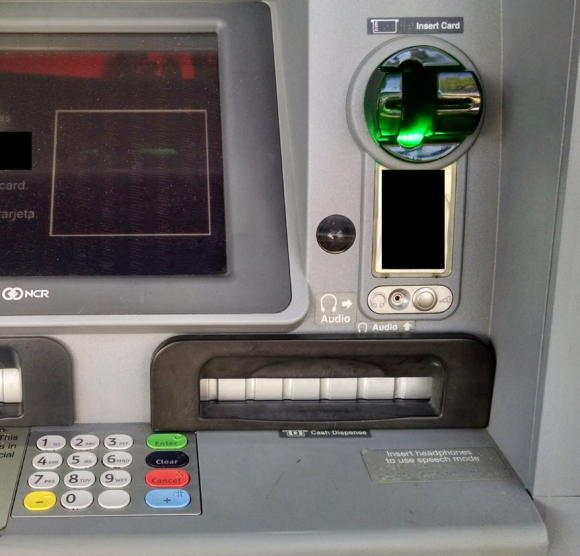
Once you understand how easy and common it is for thieves to attach “skimming” devices to ATMs and other machines that accept debit and credit cards, it’s difficult not to closely inspect and even tug on the machines before using them. Several readers who are in the habit of doing just that recently shared images of skimmers they discovered after gently pulling on various parts of a cash machine they were about to use.

Read More
ComputerWorldIndependent

Top 5 VPN services for personal privacy and security

Credit to Author: Paul Mah| Date: Fri, 31 Mar 2017 09:28:00 -0700

Virtual private networks (VPNs) encrypt internet connections between two points, to secure them from casual snoopers and hackers. These VPN services are particularly useful when accessing the internet from an untrusted location, such as a hotel, café or coworking space.

A plethora of modern VPN services, with dedicated connectivity apps, have put an end to the maddening manual configuration VPNs once required. No two VPN offerings are alike, however, and it can be a challenge to find the right VPN. Here’s a look at some of the top VPNs for privacy and security.

To read this article in full or to leave a comment, please click here

Read More
ComputerWorldIndependent

What to look for in a VPN to protect your privacy

Credit to Author: Darlene Storm| Date: Fri, 31 Mar 2017 07:09:00 -0700

If you haven’t already, then it is time to embrace a virtual private network.

Our lawmakers recently voted to remove regulations which would stop ISPs from selling your online life, manipulating your search results and controlling what you see online. Even if you don’t care about highly targeted advertising being thrown your way, it’s the principle of the profiling. You wouldn’t run a computer without some type of protection such as anti-malware and a firewall; sadly, the day has come when you shouldn’t connect online without using a VPN.

To read this article in full or to leave a comment, please click here

Read More
ComputerWorldIndependent

IDG Contributor Network: Insiders — the invisible threat lurking in your office

Credit to Author: Robert C. Covington| Date: Fri, 31 Mar 2017 06:23:00 -0700

With all of the focus in the business world recently related to hackers, we have tended to overlook a group of potential bad actors who have already penetrated our perimeter security, and have access to our facilities — our employees and contractors. While our security teams usually monitor firewall and intrusion prevention logs, the threat from insiders is, in many cases, completely ignored. 

While some insiders are intent on stealing data or damaging systems for profit or some other motive, many more expose their employers to harm just by making mistakes. Whether intent exists or not, the damage is just as bad

To read this article in full or to leave a comment, please click here

Read More
IndependentKrebs

Post-FCC Privacy Rules, Should You VPN?

Credit to Author: BrianKrebs| Date: Thu, 30 Mar 2017 21:33:48 +0000

Many readers are understandably concerned about recent moves by the U.S. Congress that would roll back privacy rules barring broadband Internet service providers (ISPs) from sharing or selling customer browsing history, among other personal data. Some are concerned enough by this development that they’re looking at obfuscating all of their online browsing by paying for a subscription to a virtual private networking (VPN) service. This piece is intended to serve as a guidepost for those contemplating such a move.

Read More