Independent

ComputerWorldIndependent

Adobe Reader, Edge, Safari and Ubuntu fall in first day at Pwn2Own

Credit to Author: Lucian Constantin| Date: Thu, 16 Mar 2017 10:37:00 -0700

Bug hunters have gathered again to test their skills against some of the most popular and mature software programs during the Pwn2Own hacking contest. During the first day, they successfully demonstrated exploits against Microsoft Edge, Apple’s Safari, Adobe Reader and Ubuntu Desktop.

The Pwn2Own contest runs every year during the CanSecWest security conference in Vancouver, British Columbia. It’s organized and sponsored by the Zero Day Initiative (ZDI), an exploit acquisition program operated by Trend Micro after its acquisition of TippingPoint.

This year the contest has a prize pool of $1 million for exploits in five categories: virtual machines (VMware Workstation and Microsoft Hyper-V); web browser and plugins (Microsoft Edge, Google Chrome, Mozilla Firefox, Apple Safari and Flash Player running in Edge); local escalation of privilege (Microsoft Windows, macOS and Ubuntu Desktop); enterprise applications (Adobe Reader, Word, Excel and PowerPoint) and server side (Apache Web Server on Ubuntu Server).

To read this article in full or to leave a comment, please click here

Read More
ComputerWorldIndependent

U.S. faces limits in busting Russian agents over Yahoo breach

Credit to Author: Michael Kan| Date: Thu, 16 Mar 2017 03:52:00 -0700

In a rare move, the U.S. has indicted two Russian government agents for their suspected involvement in a massive Yahoo data breach. But what now?

Security experts say Wednesday’s indictment might amount to nothing more than naming and shaming Russia. That’s because no one expects the Kremlin to play along with the U.S. indictment.

“I can’t imagine the Russian government is going to hand over the two FSB officers,” said Jeremiah Grossman, chief of security strategy at SentinelOne.

“Even in the most successful investigations, state hackers are still immune from prosecution or retaliation,” said Kenneth Geers, a research scientist at security firm Comodo.

To read this article in full or to leave a comment, please click here

Read More
IndependentKrebs

Four Men Charged With Hacking 500M Yahoo Accounts

Credit to Author: BrianKrebs| Date: Thu, 16 Mar 2017 00:49:07 +0000

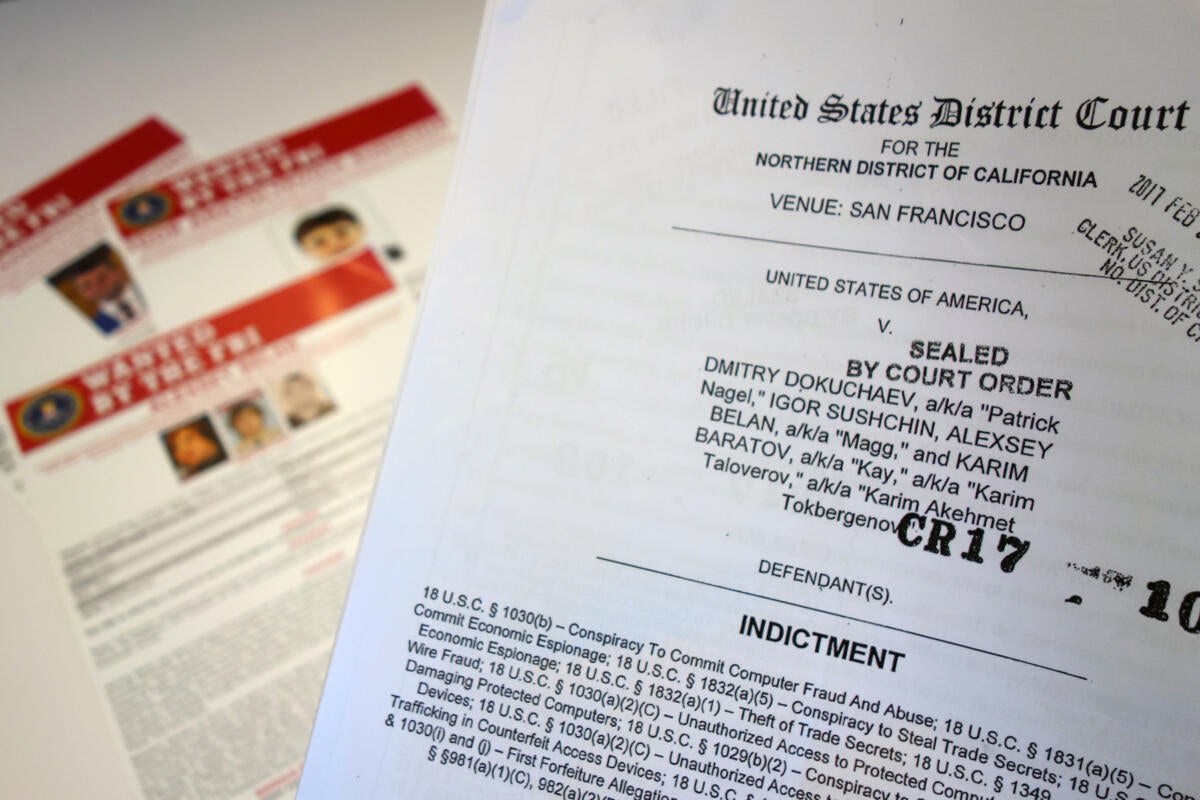
The U.S. Justice Department today unsealed indictments against four men accused of hacking into a half-billion Yahoo email accounts. Two of the men named in the indictments worked for a unit of the Russian Federal Security Service (FSB) that serves as the FBI’s point of contact in Moscow on cybercrime cases. Here’s a look at the accused, starting with a 22-year-old who apparently did not try to hide his tracks. According to a press release put out by the Justice Department, among those indicted was Karim Baratov (a.k.a. Kay, Karim Taloverov), a Canadian and Kazakh national who lives in Canada. Baratov is accused of being hired by the two FSB officer defendants in this case — Dmitry Dokuchaev, 33, and Igor Sushchin, 43 — to hack into the email accounts of thousands of individuals. According to a press release put out by the Justice Department, among those indicted was Karim Baratov (a.k.a. Kay, Karim Taloverov), a Canadian and Kazakh national who lives in Canada. Baratov is accused of being hired by the two FSB officer defendants in this case — Dmitry Dokuchaev, 33, and Igor Sushchin, 43 — to hack into the email accounts of thousands of individuals.

Read More
ComputerWorldIndependent

Inside the Russian Yahoo hack: How they did it

Credit to Author: Martyn Williams| Date: Wed, 15 Mar 2017 15:37:00 -0700

One mistaken click. That’s all it took for hackers aligned with the Russian state security service to gain access to Yahoo’s network and potentially the email messages and private information of as many as 500 million people.

The U.S. Federal Bureau of Investigation has been investigating the intrusion for two years, but it was only in late 2016 that the full scale of the hack became apparent. On Wednesday, the FBI indicted four people for the attack, two of whom are Russian spies.

Here’s how the FBI says they did it:

To read this article in full or to leave a comment, please click here
Read More
ComputerWorldIndependent

Defensive Computing for email attachments

Credit to Author: Michael Horowitz| Date: Wed, 15 Mar 2017 12:12:00 -0700

Email attachments remain an effective way to infect/compromise computers because people trust them too much. Blindly opening them is easy, simple and quick, but, it’s also not secure. What is secure?

Never open email attachments using Microsoft Office or Adobe’s PDF reading software.

Really should go without saying at this point.

Never open attachments on a Windows, Mac or Linux computer you care about or use regularly.

These old desktop systems are simply not as secure as more modern operating systems.

The safest computers for opening suspect files run iOS or Chrome OS.

To read this article in full or to leave a comment, please click here

Read More
ComputerWorldIndependent

Microsoft fixes record number of flaws, some publicly known

Credit to Author: Lucian Constantin| Date: Wed, 15 Mar 2017 11:54:00 -0700

Microsoft’s batch of security patches for March is one of the largest ever and includes fixes for several vulnerabilities that are publicly known and actively exploited.

The company published 17 security bulletins covering 135 vulnerabilities in its own products and one separate bulletin for Flash Player, which has its security patches distributed through Windows Update. Nine bulletins are rated critical and nine are rated as important.

The affected products include Windows, Internet Explorer, Microsoft Edge, Microsoft Office, Exchange, Skype for Business, Microsoft Lync, and Silverlight.

To read this article in full or to leave a comment, please click here

Read More
ComputerWorldIndependent

IDG Contributor Network: Largest ever Patch Tuesday from Microsoft

Credit to Author: Greg Lambert| Date: Wed, 15 Mar 2017 11:44:00 -0700

After last month’s rather brief Patch Tuesday from Microsoft, we see the largest ever release of updates for Windows and Microsoft Office — and of course another critical update for Adobe Flash Player.

For this March update, we see an unusually large number of critical updates — nine patches rated as critical and the remaining nine rated by Microsoft as important. In addition to this large cohort of patches, we also get a security advisory with KB3123479.

We have added both browser patches (MS17-006 and MS17-007) and the Adobe Flash Player update (MS17-023) to our “Patch Now” list. In addition, the core XML Services patch (MS17-022), though only rated as important by Microsoft, attempts to resolve a publicly disclosed zero-day flaw. MS17-022 was therefore also added to our “Patch Now” list.

To read this article in full or to leave a comment, please click here

Read More