Paying for ransomware could cost you more than just the ransom
Credit to Author: Trend Micro| Date: Wed, 22 Mar 2017 19:43:20 +0000
 Paying for ransomware could end up costing you more than you anticipated, leaving you to handle the fallout.
RSS Reader for Computer Security Articles
Credit to Author: Trend Micro| Date: Wed, 22 Mar 2017 19:43:20 +0000
Paying for ransomware could end up costing you more than you anticipated, leaving you to handle the fallout.

Credit to Author: Gregg Keizer| Date: Wed, 22 Mar 2017 13:23:00 -0700
Hackers claiming to have hundreds of millions of iCloud credentials have threatened to wipe date from iPhones, iPads and Macs if Apple does not fork over $150,000 within two weeks.
“This group is known for getting accounts and credentials, they have gotten credentials in the past,” said Lamar Bailey, director of security research and development at Tripwire, of the purported hackers. “But whether they have that many … who knows?”
There’s another reason for not panicking, Bailey said: People can quickly make their accounts more secure, assuming the criminals have only collected, not actually compromised the iCloud accounts by changing millions of passwords.
To read this article in full or to leave a comment, please click here

Credit to Author: Michael Kan| Date: Wed, 22 Mar 2017 12:41:00 -0700
The chances of your encountering malware on your Android phone is incredibly small, according to Google.
By the end of last year, less than 0.71 percent of Android devices had installed a “potentially harmful application,” such as spyware, a Trojan, or other malicious software.
That figure was even lower, at 0.05 percent, for Android phones that downloaded apps exclusively from the Google Play store.
The internet giant revealed the figures in a new report detailing its efforts to making the Android OS secure. Thanks to better app review systems, the company is detecting and cracking down on more malware.
To read this article in full or to leave a comment, please click here

Credit to Author: Lucian Constantin| Date: Wed, 22 Mar 2017 09:43:00 -0700
A group of hackers is threatening to wipe data from millions of Apple devices in two weeks if the company doesn’t pay them US$150,000.
The group, which calls itself Turkish Crime Family, claims to have login credentials for more than 627 million icloud.com, me.com and mac.com email addresses. These are email domains that Apple has allowed for users creating iCloud accounts over the years.
Even though the Turkish Crime Family hasn’t been in the media spotlight before, its members claim that they’ve been involved in selling stolen online databases in private circles for the past few years.
The group said via email that it has had a database of about 519 million iCloud credentials for some time, but did not attempt to sell it until now. The interest for such accounts on the black market has been low due to security measures Apple has put in place in recent years, it said.
To read this article in full or to leave a comment, please click here
Credit to Author: Grant Gross| Date: Wed, 22 Mar 2017 08:33:00 -0700
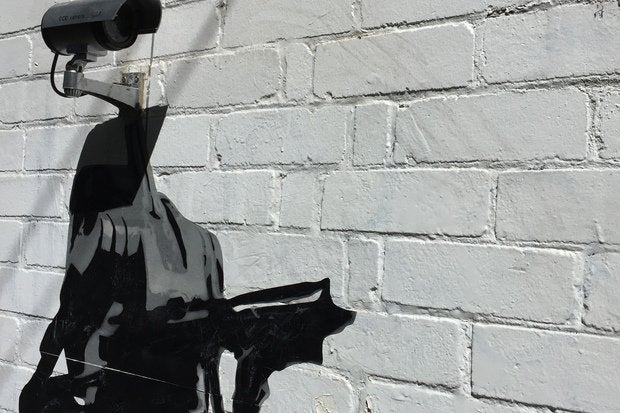
Reacting to concerns about the mass collection of photographs in police databases, U.S. lawmakers plan to introduce legislation to limit the use of facial recognition technology by the FBI and other law enforcement organizations.
The FBI and police departments across the country can search a group of databases containing more than 400 million photographs, many of them from the drivers’ licenses of people who have never committed a crime. The photos of more than half of U.S adults are contained in a series of FBI and state databases, according to one study released in October.
To read this article in full or to leave a comment, please click here
Credit to Author: Eva Chen| Date: Wed, 22 Mar 2017 14:00:46 +0000
 As I entered CeBIT 2017 on Monday, a nostalgic wave hit me. I was reminded of my first trip to this conference 27 years ago, shortly after we founded Trend Micro. Walking in that day, floppy disks and computer in hand, I was eager to learn and ready to grow in this industry. My excitement…
Credit to Author: Andy Greenberg| Date: Wed, 22 Mar 2017 14:00:39 +0000

According to Google’s own stats, only half of Android devices received a security update any time in 2016. The post Good News: Android’s Huge Security Problem Is Getting Less Huge appeared first on WIRED.
Read More
Credit to Author: Darlene Storm| Date: Wed, 22 Mar 2017 06:25:00 -0700
Tavis Ormandy, a security researcher on Google’s Project Zero team, warned of flaws in LastPass browser extensions, vulnerabilities which – if a person surfed to a malicious site – would allow the malicious site to steal passwords from the password manager.
LastPass said it patched the vulnerability in its Chrome extension and said it is working on a fix for the flaw in its Firefox add-on.
Ormandy originally said the LastPass bug affected 4.1.42 Chrome and Firefox browser extensions. He developed a working exploit for a Windows box running the LastPass Chrome extension, but said it “could be made to work on other platforms.” He sent the details to LastPass before adding:
To read this article in full or to leave a comment, please click here