Much has been written about the need to further secure our elections, from ensuring the integrity of voting machines to combating fake news. But according to a report quietly issued by a California grand jury this week, more attention needs to be paid to securing social media and email accounts used by election officials at the state and local level.
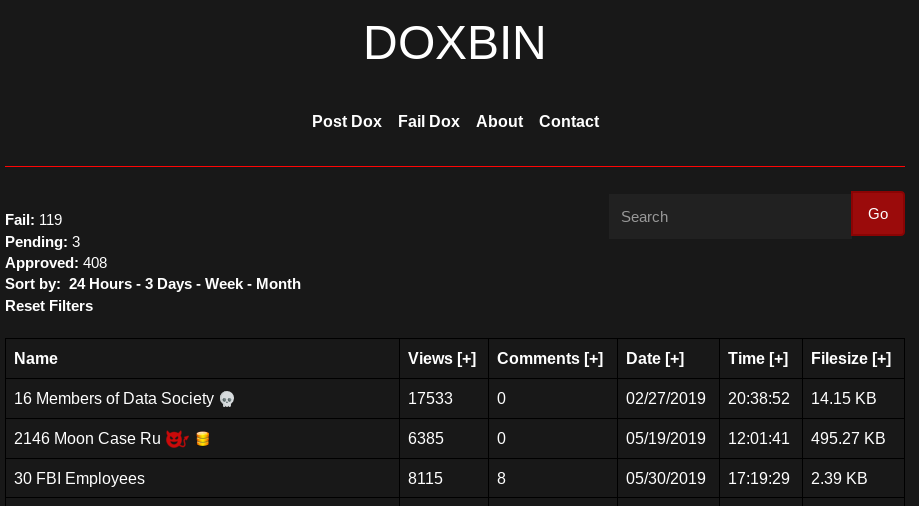
Nearly three dozen journalists at a broad range of major publications have been targeted by a far-right group that maintains a Deep Web database listing the personal information of people who threaten their views. This group specializes in encouraging others to harass those targeted by their ire, and has claimed responsibility for dozens of bomb threats and “swatting” incidents, where police are tricked into visiting potentially deadly force on the target’s address.
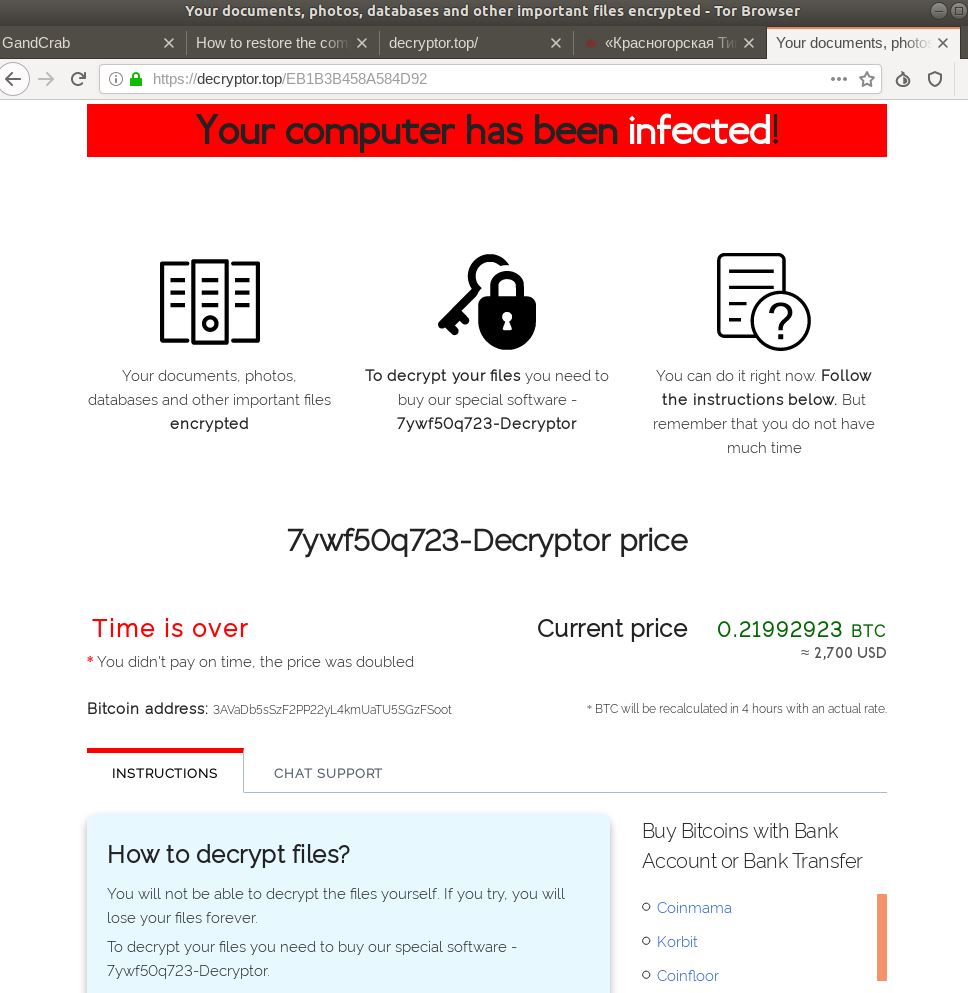
The cybercriminals behind the GandCrab ransomware-as-a-service (RaaS) offering recently announced they were closing up shop and retiring after having allegedly earned more than $2 billion in extortion payments from victims. But a growing body of evidence suggests the GandCrab team have instead quietly regrouped behind a more exclusive and advanced ransomware program known variously as “REvil,” “Sodin,” and “Sodinokibi.”
Credit to Author: BrianKrebs| Date: Tue, 25 Jun 2019 15:24:29 +0000
Earlier this month, Google disclosed that a supply chain attack by one of its vendors resulted in malicious software being pre-installed on millions of new budget Android devices. Google didn’t exactly name those responsible, but said it believes the offending vendor uses the nicknames “Yehuo” or “Blazefire.” What follows is a deep dive into the identity of that Chinese vendor, which appears to have a long and storied history of pushing the envelope on mobile malware.
Credit to Author: BrianKrebs| Date: Wed, 22 May 2019 19:26:04 +0000
Some of the most convincing email phishing and malware attacks come disguised as nastygrams from a law firm. Such scams typically notify the recipient that he/she is being sued, and instruct them to review the attached file and respond within a few days — or else. Here’s a look at a recent spam campaign that peppered more than 100,000 business email addresses with fake legal threats harboring malware.
Credit to Author: BrianKrebs| Date: Wed, 15 May 2019 22:09:12 +0000
In the early days of the Internet, there was a period when Internet Protocol 4 (IPv4) addresses (e.g. 4.4.4.4) were given out like cotton candy to anyone who asked. But these days companies are queuing up to obtain new IP space from the various regional registries that periodically dole out the prized digits. With the value of a single IP hovering between $15-$25, those registries are now fighting a wave of shady brokers who specialize in securing new IP address blocks under false pretenses and then reselling to spammers. Here’s the story of one broker who fought back in the courts, and lost spectacularly. On May 14, South Carolina U.S. Attorney Sherri Lydon filed criminal wire fraud charges against Amir Golestan, alleging he and his Charleston, S.C. based company Micfo LLC orchestrated an elaborate network of phony companies and aliases to gather more than 735,000 IPs from the American Registry for Internet Numbers (ARIN), a nonprofit which oversees IP addresses assigned to entities in the U.S., Canada, and parts of the Caribbean.
Credit to Author: BrianKrebs| Date: Fri, 03 May 2019 16:48:36 +0000
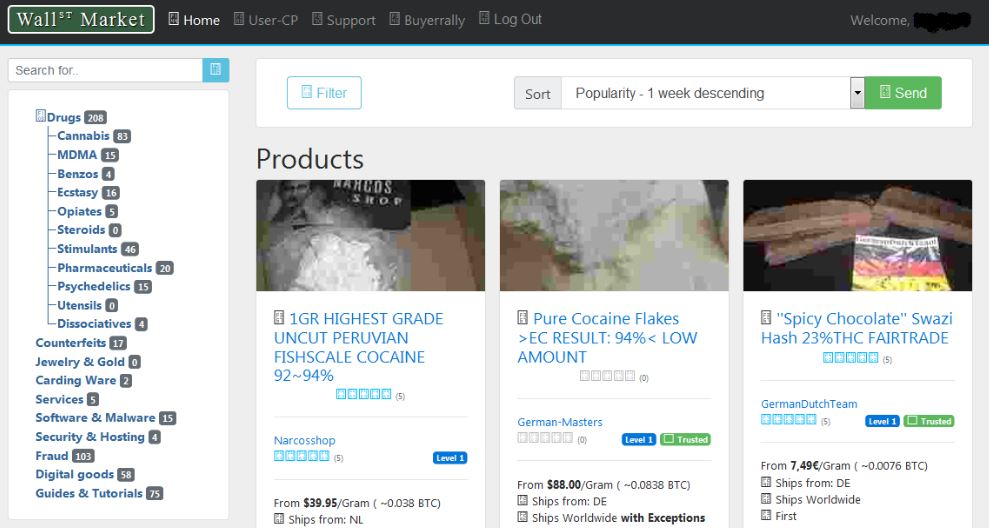
Federal investigators in the United States, Germany and the Netherlands announced today the arrest and charging of three German nationals and a Brazilian man as the alleged masterminds behind the Wall Street Market (WSM), one of the world’s largest dark web bazaars that allowed vendors to sell illegal drugs, counterfeit goods and malware. Now, at least one former WSM administrator is reportedly trying to extort money from WSM vendors and buyers (supposedly including Yours Truly) — in exchange for not publishing details of the transactions.
Credit to Author: BrianKrebs| Date: Fri, 03 May 2019 14:30:36 +0000
A Pennsylvania credit union is suing financial industry technology giant Fiserv, alleging that “baffling” security vulnerabilities in the company’s software are “wreaking havoc” on its customers. The credit union said the investigation that fueled the lawsuit was prompted by a 2018 KrebsOnSecurity report about a glaring security weakness a Fiserv platform that exposed personal and financial details of customers across hundreds of bank Web sites.